
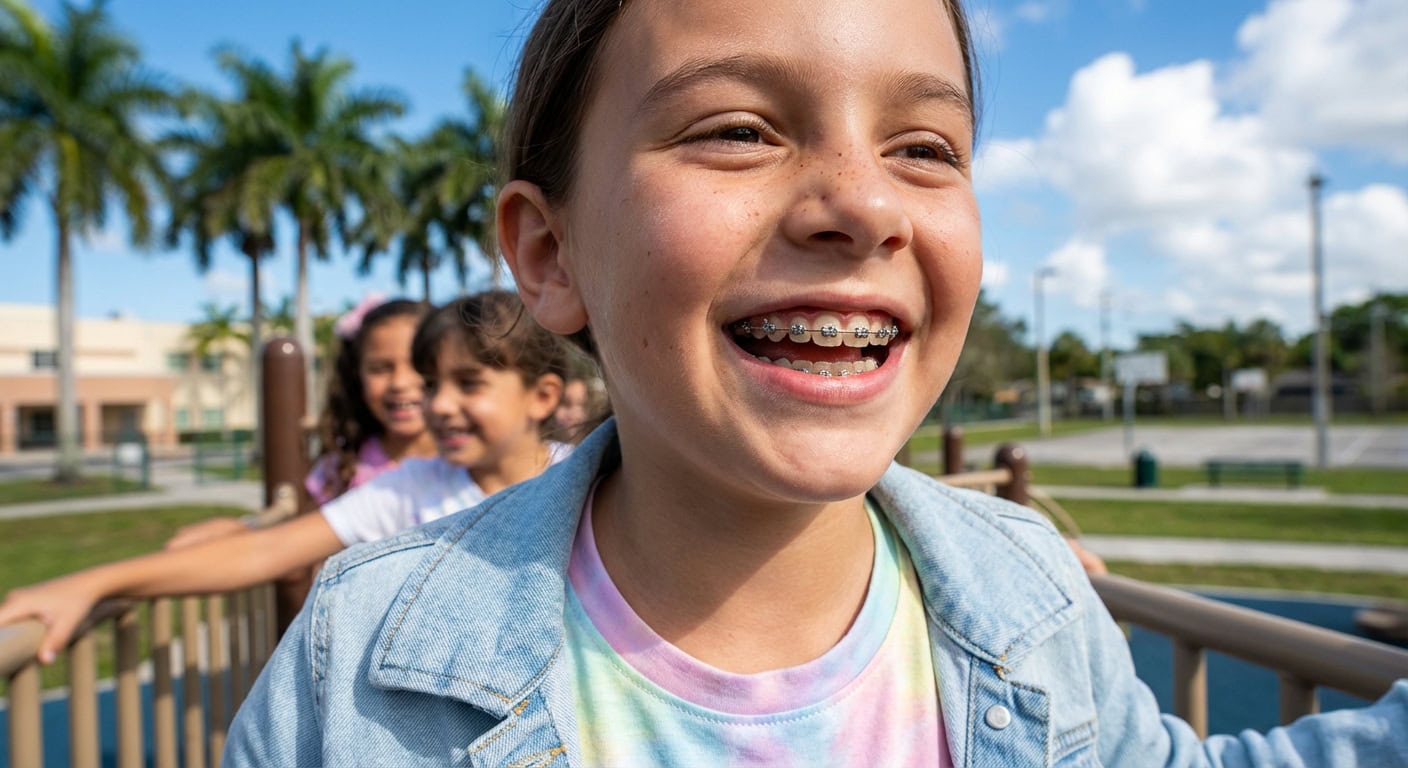
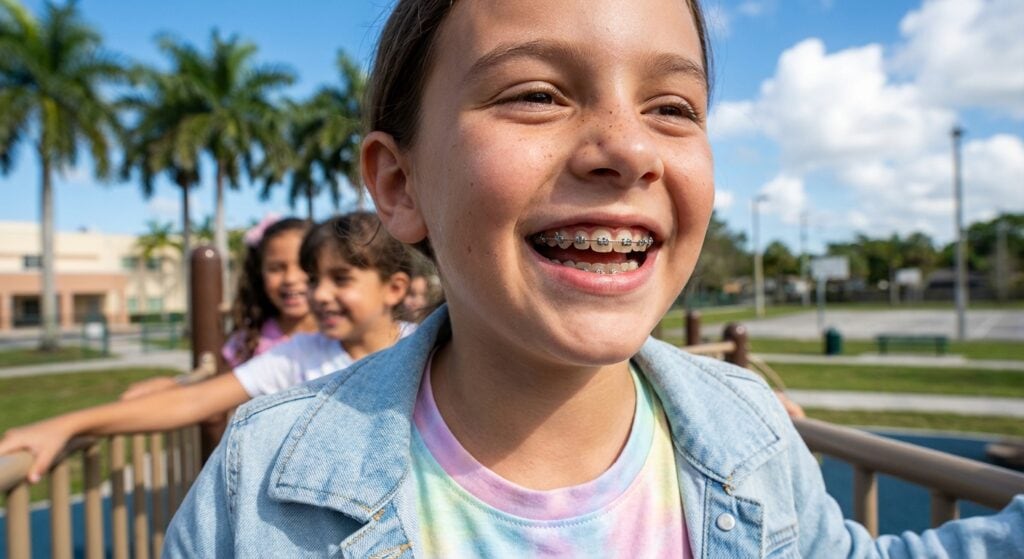
Early Orthodontics for Kids Ages 6-10 in Pembroke Pines
Your kid walks into school with a crooked smile, and suddenly you're wondering if you should be doing something about it now.
The truth is, most parents don't know that catching orthodontic issues early—when your child is between 6 and 10 years old—can save you from bigger problems, more expensive treatments, and way more hassle down the road.
This is Phase 1 orthodontics, and it's a game-changer for kids in Pembroke Pines.
I get it.
You're busy.
Your kid is growing fast.
You're not sure if their smile needs help now or if you should just wait.
That's exactly why I'm breaking this down for you.
What Is Phase 1 Orthodontics (And Why Your Kid Might Need It)
Phase 1 orthodontics is interceptive treatment that happens while your child still has a mix of baby teeth and permanent teeth.
It's not the full braces everyone thinks about.
Instead, it's targeted work that guides jaw growth, creates space, and fixes bite problems before they get worse.
Think of it like this: your kid's jaw is still growing and developing.
Right now, you can gently nudge it in the right direction.
Wait five more years, and that jaw is already set.
Now you're looking at bigger interventions, possible tooth extractions, or even surgery.
The American Association of Orthodontists (AAO) actually recommends that every kid gets evaluated by age 7.
Not everyone needs treatment, but catching issues early means simpler fixes.
The Common Signs Your 6-10 Year Old Might Benefit from Phase 1
Let me walk you through what parents in Pembroke Pines actually see when their kids need help.
Crowding and overlapping teeth.
Your kid's baby teeth are packed together like they're fighting for space.
This usually means their permanent teeth won't have room either.
Early phase 1 treatment creates that space before the permanent teeth come in, avoiding extractions later.
Crossbites.
Your child's jaw shifts side to side when they chew.
You might notice their lower jaw moves to one side.
This causes uneven wear on their teeth and can lead to problems with their jaw joint.
Fixing it early prevents long-term damage.
Mouth breathing.
Your kid's mouth is always open, especially at night.
This isn't just a habit.
It can affect how their face grows, impact their airway, and even mess with their sleep quality.
Early orthodontic intervention can help redirect this pattern.
Thumb sucking that won't quit.
Most kids stop around age 5, but some keep going.
If your child is still doing it past that age, it's pushing their teeth forward and affecting their bite.
Special appliances can gently break this habit without shame or frustration.
Severe overbite or underbite.
When the upper teeth stick way out in front or the lower jaw is too far back or forward, that's something to address early.
Here's the real talk: not every kid needs Phase 1.
About 25 percent do, according to AAO data.
That's why getting a professional evaluation matters.
Phase 1 vs. Waiting: What Actually Changes
Let me show you what happens when you act early versus when you wait.
If you get Phase 1 treatment now, your child's jaw grows with proper guidance.
Space is created for permanent teeth.
Bite issues are corrected while their bones are still soft and responsive.
Phase 2 treatment (if needed later) is shorter and less complicated.
Your kid gets confidence early.
If you wait, baby teeth fall out and permanent teeth crowd in.
Your child might need four tooth extractions to make room.
The bite problem gets worse and harder to fix.
Full braces treatment takes longer because there's more to correct.
Your kid potentially faces jaw surgery if the underbite or overbite is severe enough.
Cost-wise, early treatment often costs less total because you're preventing bigger problems.
Why Pembroke Pines Families Choose SMILE-FX for Phase 1 Orthodontics
You could go to any dentist who offers braces.
But there's a difference between a dentist who does braces on the side and an actual orthodontist specialist who focuses exclusively on teeth and jaw alignment.
SMILE-FX Orthodontics is staffed with board-certified specialists who work with kids every single day.
We're the practice that pediatric dentists across South Florida trust and refer to.
Here's what makes it different when you come in for Phase 1 orthodontic treatment:
Advanced technology that catches problems early.
We use low-dose CBCT scans (safer than traditional X-rays) and AI-driven growth predictions.
This means we spot issues before they become obvious, aligning perfectly with AAO guidelines.
Every kid gets the VIP experience.
There's no rush, no high-volume factory feel.
Your child gets a dedicated space with VR games, weighted blankets, noise-canceling headphones, snacks, and personal TVs.
We're making orthodontic visits actually enjoyable, not something they dread.
Treatment that respects your schedule.
Families from Pembroke Pines are just 10-15 minutes away from our Miramar location.
We offer appointments before 9 AM or after 3:30 PM so it fits school schedules.
Virtual check-ins are available too.
Phase 1 treatment typically runs 6 to 12 months.
We're not trying to rush kids into braces.
We're guiding growth and intercepting problems early so they don't compound.
What Your Child's First Visit Actually Looks Like
You show up wondering what to expect.
Here's the breakdown.
The first appointment takes about 30 to 45 minutes.
Your child comes in, and we chat about what you've noticed, what they're experiencing, and what concerns you have.
No judgment, no pressure.
Then we take low-dose digital scans.
It's fast, painless, and way safer than old-school X-rays.
Your child gets to spend time in our kid zone with games and activities while we review the scans.
We go over the findings together.
If Phase 1 treatment makes sense, we explain exactly what it involves.
If monitoring is enough for now, we tell you that too.
No upselling.
You walk out knowing exactly where your child stands.
The Real Timeline: What Happens After Phase 1
Phase 1 isn't the end of the story for most kids.
After we've guided jaw growth and created proper space, there's usually a "resting period."
Your child's permanent teeth come in, and we monitor how things are progressing.
Then Phase 2 happens, usually around ages 12-14.
At that point, all permanent teeth are in, and we do full alignment if needed.
But here's the win: because of Phase 1, Phase 2 is shorter, simpler, and sometimes unnecessary.
Some kids finish Phase 1 and their permanent teeth come in perfectly aligned.
No Phase 2 needed.
That's the goal.
Why AAO Recommends Early Evaluation
The American Association of Orthodontists didn't just pick age 7 randomly.
By age 7, orthodontists can see how the permanent teeth are developing, spot problems with jaw growth, and identify habits that need to change.
Waiting until all permanent teeth are in (usually age 11-13) means missing the window when jaw growth is most responsive to guidance.
You're making treatment longer and more complex.
That's science, not marketing.
The Pembroke Pines Advantage
If you're in Pembroke Pines, Weston, Cooper City, Davie, Hollywood, or Fort Lauderdale, you've got SMILE-FX in Miramar right there.
We're not a chain office where you see a different person each visit.
You get consistent, personalized care from the same team who knows your child.
We speak your language too, with Spanish options available for our families.
What Your Investment Actually Covers
Phase 1 treatment involves multiple appointments, careful monitoring, and custom-fitted appliances.
Your investment covers all of that, plus the expertise of board-certified orthodontists.
We're transparent about costs from day one.
No hidden fees, no surprise charges at the end.
When you factor in that proper Phase 1 treatment can prevent extractions, surgery, and unnecessarily long Phase 2 treatment, the value becomes really clear.
Questions Parents Ask All the Time
Do all kids need Phase 1?
No. About 25 percent do. We evaluate, explain what we see, and only recommend treatment if it's genuinely beneficial.
What if my child has anxiety about appointments?
We've built our whole experience around making anxious kids comfortable. VR headsets, weighted blankets, snacks, personal attention. Kids often look forward to appointments.
Can Phase 1 fix thumb sucking without making my kid feel bad?
Yes. Special appliances gently discourage the habit. Most kids stop within weeks without any shame or frustration.
How do I know if my child needs early orthodontic treatment?
Book a free consultation. We take scans, do a full evaluation, and tell you exactly what we see and what (if anything) makes sense.
The Cutting-Edge Tools We Use for Phase 1
Our technology isn't what you'd see at a general dental office.
We're using 3D imaging, AI growth prediction, and digital treatment planning.
This means we catch problems earlier and plan treatment more precisely.
You're not paying for fancy equipment just for the sake of it.
Better tools mean better outcomes and shorter treatment times.
Ready to Find Out if Phase 1 Is Right for Your Child
Stop wondering if now's the time.
Get answers.
Book a FREE 3D scan and VIP smile consultation with our team at SMILE-FX.
We'll take digital scans, review your child's development, and tell you exactly what we recommend.
No pressure, no sales pitch.
Just honest feedback from orthodontists who specialize in kids.
Your child's confident smile starts now.
Let's make it happen.
Beyond Phase 1: What Happens When Your Child Gets Older and Needs More Comprehensive Orthodontic Care
So your kid made it through Phase 1, and now you're wondering what comes next.
Maybe their permanent teeth are coming in and you're seeing some crowding.
Maybe they're hitting their teenage years and you're thinking about braces for teens or clear aligners.
Here's the thing: not all orthodontic treatment looks the same, and what works for a six-year-old doesn't work for a thirteen-year-old.
When Your Kid Gets Older: The Different Paths Forward
Around age 11 or 12, most kids start getting their permanent teeth in.
That's when some parents start wondering if braces are coming next.
The answer isn't always yes.
Some kids sail through with perfect alignment because of Phase 1.
Others need more work.
Here's what I'm seeing at SMILE-FX with kids who are a bit older:
Some families come in worried about crowding that Phase 1 didn't completely fix.
Some kids have bite problems that need full-mouth correction.
Some are self-conscious about their smile and want it handled before high school starts.
All of those situations call for different solutions.
Traditional Braces Still Work, But They're Not Your Only Option
When people think orthodontics, they think metal braces.
Brackets, wires, the whole deal.
And yeah, traditional braces are still incredibly effective.
They give your orthodontist the most control to move teeth in any direction needed.
Teenagers actually don't mind them as much as you'd think.
The thing is, braces for teenagers are way different than they were ten years ago.
They're smaller.
They're less noticeable.
And at SMILE-FX, we make wearing them actually tolerable because we get how a teenager thinks.
But here's what's really changed the game.
Clear Aligners: The Option Teenagers Actually Want
This is where it gets interesting.
Most teenagers would rather do almost anything than have visible braces.
Enter clear aligners.
Clear aligners like Invisalign are custom-made trays that move teeth gradually.
They're nearly invisible.
Your kid can take them out to eat, brush, and play sports.
No food restrictions.
No metal in their mouth.
The catch?
They only work if your teenager actually wears them.
We're talking 22 hours a day.
If your kid is responsible enough, they're perfect.
If they're going to lose them or forget to wear them, traditional braces might be the better move.
I've seen teenagers transform their whole attitude about orthodontics when they learn about clear aligners.
Suddenly it's not something they dread.
It's something they're actually willing to do.
Which One Should You Choose for Your Older Child?
Let's be real about this.
Choose traditional braces if your teenager has complex bite issues that need serious correction.
Choose braces if they're not mature enough to handle aligners responsibly.
Choose braces if you want set-it-and-forget-it treatment where the orthodontist has total control.
Choose clear aligners if your kid cares about appearance and is willing to commit to wearing them.
Choose aligners if they're athletic or play an instrument.
Choose aligners if they want to feel more confident right now instead of waiting until braces come off.
Here's what happens at your consultation: we explain both options, show your kid what they actually look like, and let them help decide.
A teenager who chooses their treatment is way more likely to stick with it.
What About the Cost for Older Kids?
Parents always ask this.
Full comprehensive treatment for a teenager usually costs more than Phase 1 did because there's more work involved.
But here's what most people don't realize: if your kid had proper Phase 1 treatment, the comprehensive phase is often shorter and simpler than it would've been without Phase 1.
So you're not paying twice as much.
You're investing in two shorter phases instead of one massive one.
We break down payment plans so it's not crushing your budget.
Many families pay monthly and spread treatment cost across the actual treatment time.
It's way more manageable than writing one big check.
The Reality of Treatment Time for Teenagers
Comprehensive orthodontic treatment typically takes 18 to 24 months.
Sometimes longer if the bite is really complex.
Sometimes shorter if it's mainly cosmetic alignment.
With clear aligners, you're usually looking at the faster end of that range.
With braces, it can vary more.
Either way, it's not forever.
Your kid will have a perfect smile before they graduate high school.
Can Your Teenager Actually Handle Wearing Aligners?
This comes up a lot.
Parents are worried their teenager will lose them or forget them.
Here's my honest take:
If your kid is managing schoolwork, keeping track of their phone, and generally responsible, they can handle aligners.
If they lose everything and you're constantly replacing stuff, braces might actually be easier.
At SMILE-FX, we track aligner compliance with our advanced technology.
We know if they're wearing them or not.
We can address it if compliance isn't happening.
Most teenagers surprise their parents.
When it's their choice and they understand the benefit, they step up.
What About Adults? Are You Never Too Old for Orthodontics?
Here's something that might surprise you.
A lot of adults come to SMILE-FX wishing they'd done this when they were younger.
And guess what?
We can absolutely help them now.
Your age doesn't matter for orthodontics.
Your teeth move the same way whether you're 15 or 50.
Bone health matters more than age, and most adults have that.
Adults usually prefer clear aligners because they care about their professional appearance.
Some choose braces because they want the fastest option or they have complex cases.
The point is, if you're reading this and thinking about your own smile, don't put it off forever.
We handle all ages.
How SMILE-FX Approaches Treatment for Different Age Groups
We're not just orthodontists who specialize in kids.
Our team works with patients from young children through adults.
That matters because we understand what each age group actually needs.
With teenagers, we focus on options they'll actually follow through with.
With adults, we're conscious of time and professional appearance.
With younger kids, we're guiding growth and preventing problems.
Our board-certified specialists have the training and experience to customize treatment for every patient.
It's not one-size-fits-all.
The Question Every Parent Eventually Asks
Is now the right time to start treatment?
Should I wait?
Will waiting make it worse?
Here's how I think about it.
If your child is between 6 and 10 and shows signs of orthodontic issues, Phase 1 preventive treatment makes sense.
If they're already 12 or 13 and definitely need correction, waiting longer just delays the process.
Every month you wait is a month longer they're dealing with a smile they're not confident about.
If you're an adult reading this, there's no good reason to wait.
Orthodontic treatment works at any age.
Getting Started is Simple
You don't need a referral.
You don't need to figure this out on your own.
Book a FREE 3D scan and VIP smile consultation here.
We'll take digital scans, evaluate what we're seeing, and explain exactly what your kid needs and what it costs.
No pressure to decide on the spot.
No upselling.
Just honest conversation about your child's smile and what makes sense for their situation.
Whether your kid needs Phase 1 early intervention, comprehensive braces treatment, or clear aligners, we'll lay out the options and let you make an informed decision.
That's how orthodontics should work.
Your kid's confident smile is within reach.
Let's figure out the best path to get there.
What Happens After Braces Come Off: Retention and Long-Term Smile Success in South Florida
Your kid finally gets the braces off.
You're excited.
They're excited.
Their smile looks perfect.
Then your orthodontist says something about retention and you're thinking, "Wait, there's more?"
Yeah.
This part matters just as much as the treatment itself.
I'm going to walk you through what comes after braces or aligners come off, because most families don't understand that the real work starts when everyone thinks it's done.
Why Your Smile Wants to Go Back to How It Was
Here's the thing about teeth.
They have memory.
Your teeth spent years in one position before treatment.
They got comfortable there.
Moving them takes months or years of consistent pressure.
But once that pressure stops, your teeth want to drift back.
This is called relapse.
It's not because your orthodontist did something wrong.
It's just biology.
Your gums, your jaw, your bite position all have patterns built in.
Without retention, teeth shift.
A board certified orthodontist in South Florida will tell you straight up: retention is non-negotiable.
Skip this part and you're basically throwing away everything you paid for.
Understanding the Two Types of Retention
When treatment ends, most patients need two retention options working together.
Fixed retainers (bonded retainers).
This is a thin wire bonded to the back of your front teeth.
It's permanent.
Your kid doesn't have to do anything.
It's just there, holding everything in place.
You can't see it.
Most people forget it's even there.
The catch?
You've got to floss carefully around it and keep your teeth clean.
Removable retainers.
These come in a couple styles.
Hawley retainers look like a mouthguard with a wire across the front.
Clear retainers look like thin versions of aligners.
Both work.
Clear ones are invisible, which teenagers prefer.
Hawley retainers last longer and are easier to adjust if needed.
Most orthodontists for complex cases recommend both.
The fixed retainer keeps the front teeth locked down.
The removable retainer holds everything else and corrects any minor shifting that happens.
How Long Do You Actually Need to Wear Retainers
This is where people get confused.
The answer isn't "just for a year."
It's more like forever, but the intensity changes.
Right after braces come off, you're wearing removable retainers every single night.
That's non-negotiable.
Your teeth are still settling.
Your gums are still adjusting.
Six months of nightly wear keeps everything locked in.
After that, you can usually back off to a few nights a week.
Some people do every other night.
Some do weekends only.
The goal is maintenance, not active correction.
But here's the truth: as you get older, teeth naturally shift anyway.
You might need to wear retainers more often if you want that perfect alignment to stay perfect.
Most adults who had braces as teenagers realize by their thirties that they should've worn retainers more consistently.
The best orthodontist near me approach is to build retainer wear into your routine like brushing teeth.
Just do it.
Lost Your Retainer? Here's What Happens Next
This happens more often than you'd think.
Your kid goes to soccer practice, leaves the retainer in a locker, and it vanishes.
Or they wrap it in a napkin at lunch and accidentally throw it away.
Life happens.
Don't panic.
Getting a replacement retainer is straightforward and relatively quick.
You call your orthodontist, they make you a new one, and boom.
You're back in business.
The cost varies.
Usually it's less than a hundred bucks.
Worth it to keep your teeth from shifting back.
Way cheaper than retreatment if things go sideways.
Pro tip: get your kid a retainer case.
A good case that actually goes in their backpack means fewer lost retainers.
Some families even keep backup retainers at home just in case.
Clear Aligners vs Traditional Braces: Which Leaves You With Better Retention Options
People wonder if finishing with aligners versus braces affects retention differently.
Short answer: not really.
Both need the same retention strategy.
With clear aligners, you finish when teeth are perfectly aligned.
With traditional braces, you finish when bite and alignment are right.
Either way, you need retention.
Some patients who did aligners prefer clear retainers because they're used to invisible treatment.
Some prefer fixed retainers because they like the set-it-and-forget-it approach.
Your orthodontist will recommend what makes sense for your specific bite and tooth movement pattern.
Does Insurance Cover Retainers?
This is a common question.
Most orthodontic insurance plans cover the initial retention plan right after treatment ends.
The first retainers are typically included in your treatment package.
Replacements and adjustments usually aren't covered by dental insurance.
That's out of pocket.
Cost varies depending on the type.
Fixed retainers usually run fifty to a hundred dollars per tooth.
Clear removable retainers are typically seventy-five to a hundred fifty.
Hawley retainers similar range.
Talk to your orthodontist about cost before you need a replacement.
Some offices give discounts if you get multiple retainers made at once.
The Mouth-Breathing Problem Nobody Talks About After Treatment
Here's something weird that happens sometimes.
Your kid finishes treatment.
Their teeth look perfect.
But if they slip back into mouth breathing habits, their teeth and jaw position can shift anyway.
Mouth breathing dries out your mouth and changes pressure on your teeth.
It can actually undo some of what orthodontic treatment accomplished.
This is why some families need follow-up treatment with their best pediatric orthodontist to address underlying habits.
At SMILE-FX Orthodontic and Clear Aligner Studio, we don't just fix teeth.
We address the habits that got you there in the first place.
If mouth breathing is a risk, we'll coach you on it so retention actually works.
What About Your Adult Teeth If You Had Phase 1 Treatment
Remember those kids who did Phase 1 treatment between ages 6 and 10?
When permanent teeth finished coming in, some needed Phase 2 comprehensive treatment.
Others didn't.
Either way, retention still applies.
The difference is that patients who had Phase 1 usually have better bite foundation and less relapse tendency.
They still need retention, but the stakes are slightly lower because they started early.
This is why Phase 1 early intervention saves you headaches later.
Our board certified specialists can explain how this plays out for your specific child.
Night Guards and Retainers: Can You Use Them Interchangeably
Some families ask if a night guard for teeth grinding can do double duty as a retainer.
The answer is mostly no.
They serve different purposes.
A night guard protects teeth from grinding damage.
A retainer holds teeth in position after orthodontic correction.
You could technically wear both, but usually you'd do a fixed retainer plus a clear retainer for position, and then a separate night guard if grinding is an issue.
Your orthodontist can advise on what you specifically need.
Some patients don't grind at all.
Some have serious grinding habits.
It's individualized.
Technology Changes Everything About Retention Now
The retainer world has changed.
Advanced technology means we can make retainers more precise than ever.
3D scanning and printing create custom-fit clear retainers that track your bite perfectly.
Some practices still hand-bend traditional Hawley retainers.
That works, but modern clear retainers are more discreet and just as effective.
Your orthodontist will show you what's available.
When Retention Fails and You Need Retreatment
Sometimes patients skip retainers or don't wear them consistently and their teeth shift back.
Maybe they're in their thirties and just realized their bite isn't what it used to be.
The question becomes: do I need to do the whole treatment again?
Not always.
Minor relapse can sometimes be corrected faster.
Major relapse might need full retreatment.
It depends on how much movement happened.
This is why retention really isn't optional.
It costs way less to wear a retainer every night than to retreat teeth years later.
Nobody wants to do braces twice.
Your Teenager and Retention Compliance
Let's be real.
Teenagers are notoriously terrible at retention compliance.
They wear their retainers for a few months, then stop.
Suddenly it's a year later and they've shifted.
The fix is making retention feel less like a chore.
Clear retainers help because they're invisible.
Fixed retainers help because your kid doesn't have to remember anything.
You could also tie retainer wear to something they already do, like brushing teeth.
Some families set phone reminders.
Some build it into bedtime routine.
Find what works for your family's life.
Retention for Adults is Different
Adult patients who get orthodontics for adults often take retention more seriously because they paid for treatment themselves and understand the cost of relapse.
They typically wear retainers more consistently than teenagers.
If you're an adult considering treatment, know that lifelong retention is part of the deal.
Most adults accept this because the cost of a retainer is nothing compared to the cost of retreatment.
The Real Talk About Retention
Retention isn't punishment for finishing treatment.
It's the smartest investment you'll make in keeping your smile intact.
Think of it like this: you spent months or years moving teeth into the right position.
Retention is just maintaining that position.
It takes five minutes a day.
Every top rated orthodontist across South Florida, from Miramar to Miami to West Palm Beach, will tell you the same thing.
Wear your retainers.
If you're still figuring out whether braces, aligners, or other treatment is right for your situation, book a FREE 3D scan and VIP smile consultation at SMILE-FX.
We'll walk through your options, explain what retention looks like for your specific case, and make sure you understand the full picture before committing to treatment.
Your smile is worth protecting.
Let's keep it perfect for life.