
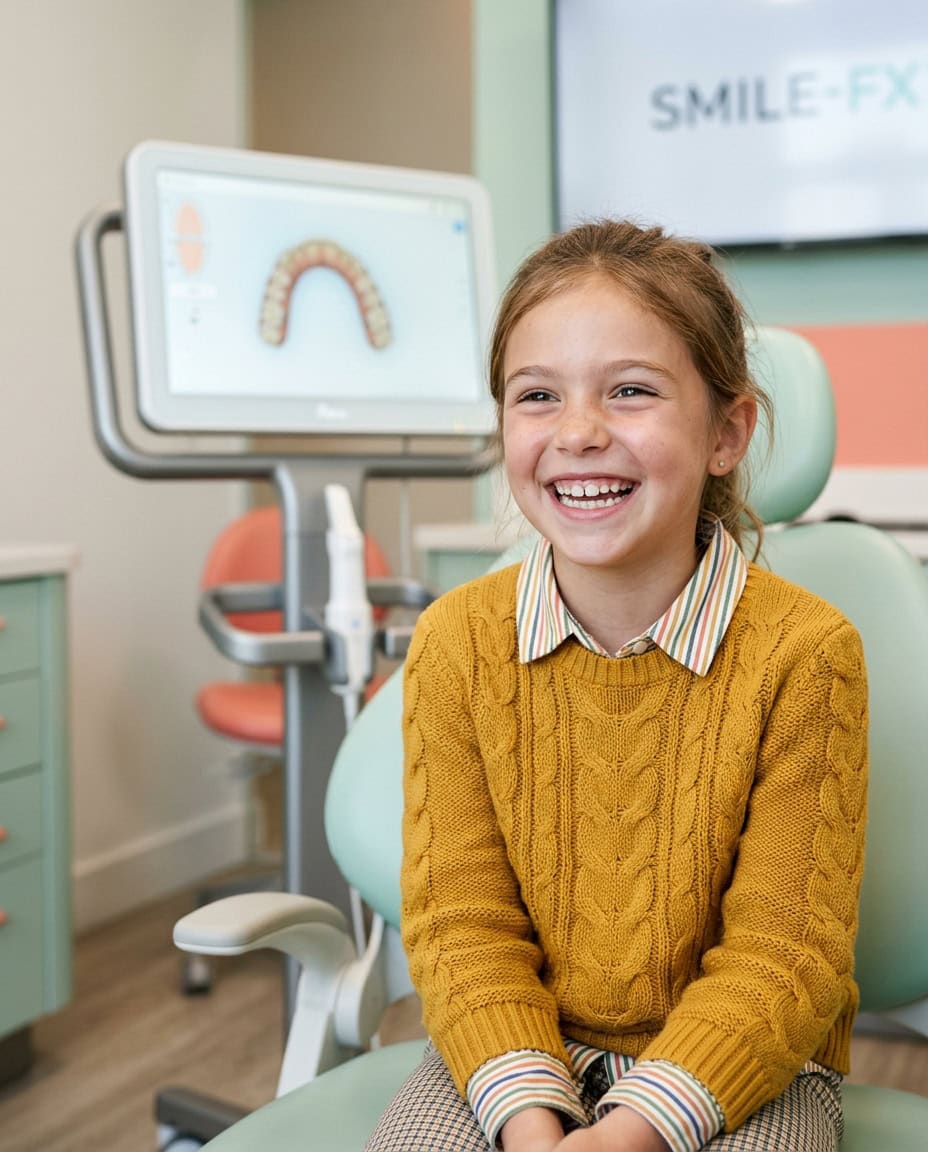
Finding the right orthodontist in Miramar and Pembroke Pines can feel overwhelming. You want someone who combines genuine expertise with the latest technology, offers custom treatments that fit your lifestyle, and creates real results that last. But what actually separates a good orthodontist from a great one?
The truth is, "best" looks different for everyone. A busy professional might prioritize remote monitoring and fewer office visits. A parent might want an office that specializes in early intervention for children. A teen might care most about discreet treatment options that won't cramp their style.
What doesn't change? The fundamentals. Every top orthodontist shares certain qualities: specialized training that goes beyond dental school, commitment to continuing education, investment in precision technology, and a genuine focus on patient outcomes over volume.
What Makes an Orthodontist the "Best," and Why It Matters
The best orthodontist combines board certification from the ABO, two to three years of specialized residency training beyond dental school, investment in advanced technology like 3D scanning and AI-assisted smile planning, and a patient-first approach to care. These qualities distinguish top specialists from average providers and directly affect the quality of your results.
Let's start with what sets orthodontists apart from general dentists. After completing dental school, orthodontists pursue an additional two to three years of specialized residency training. This focused education covers tooth movement, jaw growth, facial development, and the biomechanics of creating healthy, stable smiles.
Board certification from the American Board of Orthodontics takes this a step further. It's a voluntary credential that requires passing rigorous written and clinical examinations. When an orthodontist pursues board certification, they're showing a commitment to excellence that goes beyond the minimum requirements for practice. For families in Miramar and Pembroke Pines, verifying this credential is one of the fastest ways to narrow your search.
Look for membership in the American Association of Orthodontists, American Dental Association, and American Academy of Cosmetic Dentistry. These affiliations signal that a provider stays current with the latest advances in orthodontic care and holds themselves to a higher professional standard.
But credentials alone don't make someone the best fit for you. Consider these key differentiators when evaluating orthodontists:
Technology Investment Matters
Studios using AI-assisted bracket placement, 3D digital scanning, and in-house printing can deliver more precise outcomes with greater comfort. These aren't just bells and whistles. They translate to better-fitting appliances, fewer adjustments, and faster treatment times.
Treatment Variety Signals Expertise
An orthodontist who offers only one or two options may try to fit your case into their preferred approach. The best studios provide a full range of solutions, from braces to clear aligners to nighttime-only options, and recommend based on your specific needs.
The Patient Experience Reflects Studio Values
How does the studio feel when you walk in? How does the team communicate? A studio that invests in your comfort and keeps you informed throughout treatment is one that values relationships over transactions.
Outcomes Speak Louder Than Marketing
Real results photos, patient reviews, and case studies reveal what a studio actually delivers. Look for consistency across different case types and age groups.
Choosing the right orthodontist affects more than just your final smile. It impacts your comfort during treatment, the total cost, how often you need to visit the studio, and whether your results stay stable for years to come. This decision deserves careful consideration.
How to Evaluate an Orthodontist: A Step-by-Step Process
Evaluating an orthodontist involves five key steps: verifying credentials, researching technology, assessing treatment options, reading reviews, and scheduling a free consult. Each step helps you separate the exceptional from the average, so you can make a confident decision.
With dozens of orthodontic studios in the South Florida area, narrowing down your options requires a systematic approach. Here's how to find the right fit:
Verify Credentials First
Start by confirming the orthodontist holds a specialty license in orthodontics, not just a general dental license. You can verify this through your state's health department license verification portal. Then check whether they're board-certified through the American Board of Orthodontics.
Professional memberships also matter. Look for AAO membership at minimum, which requires completion of an accredited orthodontic residency. Memberships in organizations like the ADA, AGD, or AACD suggest a broader commitment to dental excellence. A board-certified specialist with these affiliations has demonstrated dedication that goes well beyond the baseline requirements.
Technology Tells You a Lot About a Studio
The technology a studio uses directly impacts your treatment experience. Modern orthodontic studios should offer 3D digital scanning instead of messy traditional impressions, 3D CBCT imaging for diagnostics including bone structure and airway assessment, and AI-assisted smile planning for optimized tooth movement. In-house 3D printing speeds up appliance fabrication, while remote monitoring capabilities reduce unnecessary studio visits.
Studios still relying primarily on 2D x-rays and physical impressions may deliver adequate results, but you'll likely experience less comfort and precision throughout treatment. When a studio invests in these technologies, they're backing up their claims about quality with real infrastructure.
Treatment Options Reveal a Studio's Range
A well-equipped studio should offer multiple treatment paths. These include metal braces (including self-ligating options), clear ceramic braces, clear aligners from multiple brands rather than just one, lingual (behind-the-teeth) braces, daytime and nighttime aligner options, two-phase treatment for children, and accelerated treatment options.
When a studio offers this range, they can truly customize your treatment plan rather than fitting you into their most familiar approach.
Read Reviews with a Discerning Eye
Online reviews provide valuable insight, but look for patterns rather than isolated complaints or praise. Pay attention to comments about communication and responsiveness, wait times and scheduling flexibility, how the studio handles unexpected concerns, and final outcomes compared to initial expectations.
Real results galleries reveal what a studio actually achieves. Look for cases similar to yours in complexity and treatment type.
Your Free Consult Is the Real Test
Nothing replaces an in-person or virtual free consult. This is your opportunity to evaluate several things at once. Does the orthodontist explain things clearly? Do they listen to your concerns? Is the treatment plan presented with clarity, so you understand what's being recommended and why? Is the studio clean, modern, and welcoming? Is the staff friendly and knowledgeable? Are costs clearly explained with no hidden fees?
Many studios offer free consults with advanced 3D scanning included. Take advantage of these opportunities to compare your options before committing.
Benefits of Choosing a Top-Tier Orthodontist Over a General Dentist
You might wonder whether you really need an orthodontic specialist, or if your general dentist can handle straightening your smile. For simple cases, a general dentist offering clear aligners might seem convenient. But here's what you gain by choosing a board-certified specialist:
Complex Case Expertise
Orthodontists train specifically to handle challenging situations: severe crowding, significant bite discrepancies, jaw misalignment, and cases requiring surgical coordination. A general dentist may not recognize when a case exceeds their training, potentially leading to compromised results or mid-treatment referrals. This distinction matters especially for patients in Miramar and Pembroke Pines who want to avoid switching providers halfway through treatment.
Advanced Treatment Options Only Specialists Offer
Specialists typically offer solutions unavailable at general dental studios. Self-ligating braces reduce friction and discomfort. Multiple aligner brands let you match the system to your specific needs. Daytime and nighttime-only aligner options, accelerated treatment protocols, and airway-focused orthodontics for patients with breathing concerns round out the list. A general dental studio simply cannot match this depth of options.
Convenience Without Compromise
Top orthodontic studios now offer remote monitoring through smartphone apps, reducing the need for frequent studio visits. Virtual free consults make it easy to get questions answered without disrupting your schedule. These conveniences come standard at specialist studios investing in current technology.
Two-Phase Treatment Requires a Specialist
Children with developing jaws often benefit from early intervention, sometimes called Phase 1 treatment. This requires specific training to identify which concerns need early attention and which can wait. Orthodontists understand growth patterns and timing in ways general dentists typically don't.
Better Long-Term Stability
According to the American Association of Orthodontists, proper orthodontic treatment should create results that remain stable for years with appropriate retention. Specialists understand the biomechanics of tooth movement and plan treatment with long-term stability in mind, reducing the likelihood of relapse and retreatment.
Handling Complications Effectively
When unexpected situations develop during treatment, such as a tooth not moving as planned or a bracket repeatedly failing, specialists have the training and experience to adjust course effectively. This expertise can mean the difference between a minor setback and a significant delay. Knowing your provider can handle curveballs gives you real peace of mind throughout the process.
Braces vs. Aligners: Which Treatment Fits Your Life?
One of the biggest decisions you'll make is choosing between braces and clear aligners. Both can deliver excellent outcomes, but they suit different lifestyles and case types. Here's an honest comparison:
| Factor | Traditional Braces | Clear Aligners |
|---|---|---|
| Visibility | Noticeable (metal) to subtle (ceramic) | Nearly invisible when worn |
| Removability | Fixed throughout treatment | Removable for eating and cleaning |
| Case complexity | Handles virtually any case | Best for mild to moderate cases |
| Compliance required | None (always working) | High (must wear 20-22 hours daily) |
| Eating restrictions | Yes (avoid hard, sticky foods) | None (remove to eat) |
| Oral hygiene | More challenging | Easier (remove to brush and floss) |
| Studio visits | Every 4-8 weeks typically | Less frequent with remote monitoring |
| Treatment time | Varies by case | Often comparable, sometimes faster |
Metal Braces Remain the Most Versatile Option
Metal braces handle everything from simple alignment to complex bite correction. Modern brackets are smaller and more comfortable than older versions. They work continuously without requiring patient compliance, making them ideal for children, teens, or anyone who might struggle with wearing aligners consistently. For families across Miramar and Pembroke Pines, braces remain a reliable and proven choice.
Ceramic Braces as a Middle Ground
Ceramic braces offer similar capabilities to metal braces with a more discreet appearance. The brackets blend with your natural tooth color, making them popular among adults and image-conscious teens. They require slightly more care to avoid staining but deliver comparable results.
Clear Aligners Suit Specific Lifestyles
Invisalign and other clear aligner systems have reshaped modern orthodontics. These removable trays improve your smile gradually while remaining nearly invisible. They're excellent for mild to moderate crowding, spacing, and certain bite concerns.
The catch? They only work if you wear them. Aligners require 20-22 hours of daily wear for most systems. If you're someone who might "forget" to put them back in after meals, braces might actually deliver better results for you.
Nighttime-Only Aligners Offer Maximum Freedom
Some patients qualify for nighttime-only aligners, worn just 8-10 hours while sleeping. This option suits mild cases and highly motivated patients who want maximum daytime freedom. Not everyone is a candidate, but it's worth discussing during your free consult if the idea appeals to you.
Style-Forward Options Are Growing in Popularity
For patients who want to make a statement, gold and champagne-colored braces have gained popularity. These options prove that orthodontic treatment doesn't have to be purely functional. It can express your personality too.
The Right Recommendation Depends on Your Case
Be cautious of any studio that pushes one treatment type regardless of your case. The best orthodontists evaluate your specific situation, listen to your lifestyle concerns and aesthetic preferences, then recommend the option most likely to succeed for you. Sometimes that's aligners. Sometimes it's braces. Sometimes it's a combination approach. A quality orthodontic studio offers all of these options and recommends based on each individual case rather than a one-size-fits-all approach.
How Much Does Orthodontic Treatment Cost?
Orthodontic treatment cost depends on case complexity, appliance type, insurance coverage, and the studio's technology investment. Metal braces are typically the most affordable, while lingual braces and complex clear aligner cases cost more. At SMILE-FX in Miramar and Pembroke Pines, exact pricing varies by case, so a free consult is the best way to get an accurate estimate for your specific needs.
Cost matters. Let's be direct about what drives orthodontic pricing and how to evaluate whether you're getting fair value.
What Drives Treatment Pricing?
A simple case requiring minor alignment costs significantly less than a complex case involving bite correction, jaw alignment, or extraction coordination. During your free consult, the orthodontist should explain exactly what your case involves and why. The level of technology used in planning and monitoring also factors into the overall investment.
Appliance Type Affects Price
Generally speaking, metal braces tend to be the most affordable option. Ceramic braces cost slightly more due to material costs. Clear aligners vary widely depending on brand and case complexity. Lingual braces (behind the teeth) typically cost more due to customization requirements. Nighttime aligners may cost less for appropriate cases.
Insurance and Payment Options
Many dental insurance plans include orthodontic benefits, typically covering a portion of treatment up to a lifetime maximum. Check your specific coverage before your free consult.
For patients without insurance or with remaining balances, financing options make treatment accessible. Look for studios offering interest-free payment plans, flexible monthly payment options, multiple payment method acceptance, and clear, upfront pricing with no hidden fees.
Red Flags in Pricing
Be cautious of unusually low prices that seem too good to be true. They often indicate shortcuts in materials, monitoring frequency, or provider qualifications. High-pressure sales tactics pushing you to commit immediately should raise concerns. So should vague pricing that doesn't clearly explain what's included, or surprise fees for retainers, emergency visits, or other "extras."
Transparent Pricing Builds Trust
A trustworthy studio provides a detailed treatment estimate that covers all studio visits throughout treatment, the appliances themselves (braces or aligners), any necessary x-rays or scans, and retainers at the end of treatment. You should also receive a clear explanation of what would incur additional costs.
During your free consult, ask exactly what's included and what might cost extra. A studio confident in their value will answer these questions openly. Board-certified specialists who practice with transparency tend to build stronger patient relationships and deliver more predictable outcomes.
Who Should See an Orthodontist? Candidacy for Children, Teens, and Adults
Orthodontic treatment isn't just for teenagers with braces. Patients of all ages benefit from a healthier, more aligned smile. A board-certified specialist can assess your specific needs and recommend the right path forward. Here's who should consider scheduling an evaluation:
Children Should Visit by Age 7
The American Association of Orthodontists recommends children have their first orthodontic evaluation by age 7. This surprises many parents, since most kids don't start treatment until their teens.
The purpose of early evaluation isn't necessarily early treatment. It's early detection. By age 7, enough permanent teeth have emerged to identify potential concerns like crossbites affecting jaw growth, severe crowding that may worsen, protruding front teeth at risk for injury, harmful oral habits like thumb sucking, and early or late loss of baby teeth.
Most children evaluated at 7 won't need immediate treatment. They'll simply be monitored until the right time. For those who do need early intervention, timely treatment can prevent more complex situations later. Parents in Miramar and Pembroke Pines should know that many local studios offer complimentary evaluations for young children.
Two-Phase Treatment Benefits Select Cases
Some children benefit from two-phase treatment: an initial phase during childhood to address jaw growth or specific tooth positions, followed by a second phase during adolescence for full alignment. This approach can guide jaw growth while bones are still developing, create space for permanent teeth to erupt properly, reduce the need for extractions later, and shorten or simplify the second phase of treatment. Not every child needs two phases. A qualified board-certified specialist will recommend this approach only when it provides clear benefits over waiting.
Adolescence Remains the Most Popular Window
Adolescence remains the most common time for orthodontic treatment because most permanent teeth have erupted while jaws are still growing, creating ideal conditions for tooth movement. Today's teens have more options than ever, including traditional braces, clear ceramic braces, clear aligners, and accelerated treatment options. The variety means teens can pick a treatment that fits their social life and personal style.
Adults Are Never "Too Late"
Adults now represent a significant and growing portion of orthodontic patients. Whether you missed treatment as a teen, experienced relapse after previous braces, or simply want to improve your smile now, it's never too late.
Adult treatment may take slightly longer than teen treatment due to denser bone, but modern techniques have shortened this gap considerably. Many adults complete treatment in 12-18 months. Popular options include clear aligners that are virtually invisible in professional settings, ceramic braces that blend with tooth color, lingual braces hidden behind the teeth, and nighttime-only aligners for minimal lifestyle impact. Adults across South Florida are increasingly seeking out board-certified specialists for these options.
Airway Orthodontics Addresses Breathing Concerns
A specialized area gaining recognition is airway-focused orthodontics. Patients with narrow palates, crowded teeth, and certain jaw relationships may experience sleep-disordered breathing, including sleep apnea.
Orthodontic treatment can sometimes address the structural causes of these breathing concerns, particularly in children whose jaws are still developing. If you or your child snores, breathes through the mouth, or has been diagnosed with sleep apnea, mention this during your orthodontic free consult.
Frequently Asked Questions About Choosing an Orthodontist
What is the difference between a dentist and an orthodontist?
All orthodontists are dentists, but not all dentists are orthodontists. After completing dental school, orthodontists pursue an additional two to three years of specialized residency training focused exclusively on tooth movement, jaw alignment, and facial development. This additional training qualifies them to handle complex cases that general dentists aren't equipped to treat. Think of it like the difference between a general physician and a cardiologist: both are doctors, but one has specialized expertise in a specific area.
How long does orthodontic treatment take on average?
Treatment typically takes 6 to 24 months depending on complexity. Simple alignment cases might finish in 6-12 months, moderate cases in 12-18 months, and complex bite corrections may require 18-24 months or longer. During your free consult, your orthodontist should provide a realistic timeline based on your specific situation, so be cautious of any provider promising unusually fast results without explaining how.
Can I get Invisalign instead of braces?
Many patients can achieve excellent results with clear aligners, but they're not right for everyone. Aligners work best for mild to moderate crowding, spacing, and certain bite concerns. Complex cases involving significant bite correction, severe crowding, or rotated teeth may achieve better outcomes with braces. The best approach is to consult with a board-certified specialist who offers both options and can honestly recommend which will work better for your case, and be wary of providers who only offer one treatment type.
Is it worth traveling to a better orthodontist outside my immediate area?
Quality matters more than convenience for a treatment lasting 12-24 months. If you find an orthodontist with superior credentials, technology, and patient outcomes, traveling a bit further can be worthwhile. Modern studios reduce visit frequency through remote monitoring, making distance less of a factor than it once was. That said, you'll still need periodic in-person visits, so consider what's realistic for your schedule. For residents of Miramar and Pembroke Pines, having a top-tier studio nearby eliminates this tradeoff entirely.
What questions should I ask during my orthodontic free consult?
Focus on questions that reveal credentials, treatment philosophy, and transparency. Here are specific questions to bring:
- "What is your training and are you board-certified?"
- "What treatment options do you recommend for my case and why?"
- "What technology do you use for smile planning and monitoring?"
- "How often will I need to come in for visits?"
- "What's included in the quoted price, and what might cost extra?"
- "What happens if I'm not satisfied with my results?"
- "How do you handle emergencies or concerns between visits?"
- "Can I see real results photos of similar cases you've treated?"
The answers, and how they're delivered, will tell you a lot about whether this studio is right for you.