
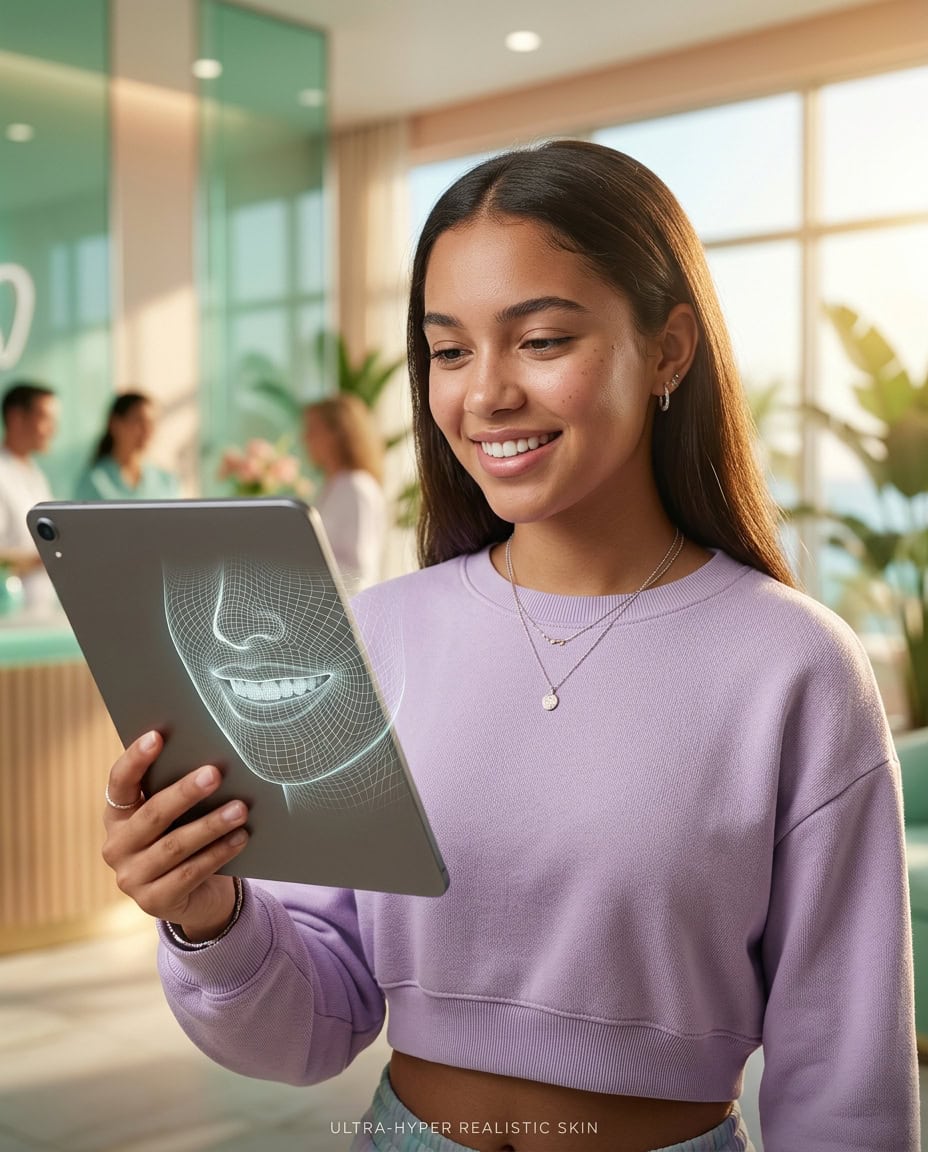
The Definitive Guide To AI BRACES by SMILE-FX
Picture this for a second. You’re sitting in an orthodontist’s chair, staring up at the ceiling tiles, while someone tries to explain how they’re going to move the very bones in your face. It's a heavy thought, right? Ten or fifteen years ago, you just had to cross your fingers, trust the process, and wait for the metal wires to do their thing. But here we are in 2026, and the landscape of orthodontics has fundamentally shifted. We aren't just reacting to how teeth move anymore—we're anticipating it.
That’s exactly where the conversation around advanced digital orthodontics usually begins. It's not about replacing the human element. Honestly, it's about giving a highly skilled, Board-Certified Orthodontist an incredibly detailed digital roadmap. This is the core philosophy behind the SMILE-FX® AI Braces™ System, a treatment approach that merges clinical experience with machine-learning-assisted digital planning.
Maybe you’ve heard the term floating around on social media or heard a friend talk about how their kid’s braces experience was surprisingly streamlined. It sounds like science fiction—AI moving teeth? But strip away the buzzwords, and what you’re really looking at is a sophisticated method of planning, bonding, and monitoring. Wires are still wires. Brackets are still brackets. But the strategy? That’s where the magic happens.
Key Takeaways: Understanding the Digital Workflow
Before we dive into the granular details of how algorithms and clinical expertise play together, let's look at a high-level breakdown of what this workflow actually entails. If you're scanning for the quick facts, here is what you need to know about this approach.
| Aspect of Treatment | How the AI Workflow May Impact It |
|---|---|
| Initial Planning | Utilizes digital scanning to create a predictive 3D model of your bite, allowing the doctor to map out root movements before day one. |
| Bracket Placement | Often uses custom 3D-printed transfer trays (indirect bonding) for highly specific bracket positioning based on the digital setup. |
| Monitoring Progress | Can incorporate remote dental monitoring apps to help track tooth movement between physical office visits. |
| Timelines | While biology always dictates speed, precise digital planning often aims to reduce the "detours" typical in standard braces adjustments. |
What "AI" Actually Means in Orthodontics (No Hype, Just Facts)
Let's get one thing straight immediately. Artificial intelligence in orthodontics does not mean a computer program is treating you. It doesn't mean a robot is gluing brackets to your molars. Think of it more like the autopilot systems used by commercial airline pilots. The plane has incredibly sophisticated sensors and algorithms to map the safest, most efficient route across the Atlantic. But the pilot? The pilot is the one interpreting that data, making the final calls, and dealing with unexpected turbulence.
When you choose AI Braces™ by SMILE-FX®, you are primarily benefiting from advanced software that analyzes thousands of data points from your unique bite. It looks at the size of your teeth, the angulation of your roots, and the available space in your jaw. Then, it offers your orthodontist a proposed sequence of movements.
The human doctor then steps in. They review the algorithm's suggestions, make critical clinical adjustments based on your facial profile and biological limits, and finalize the plan. This marriage of high-tech data processing and seasoned human intuition is what separates modern workflows from the trial-and-error methods of the past.
The Step-by-Step Experience
So, what does this look like for you, the patient? Let's walk through it. Because honestly, knowing exactly what to expect can seriously dial down the anxiety that usually accompanies starting orthodontic work.
1. The Digital Foundation (Say Goodbye to Goop)
Remember those awful, gag-inducing putty impressions from decades ago? Yeah, those are largely in the rearview mirror. Today, the process begins with cutting-edge technology like a Trios or iTero 3D optical scanner. A wand simply glides over your teeth, capturing a highly accurate, full-color digital replica of your mouth in minutes. It's entirely painless. A bit weird feeling, maybe, but zero goop.
2. The Algorithmic Mapping
Once your digital twin is created, it's fed into the software. The system helps map out the roots—not just the crowns (the white parts you see). This is crucial. If you only plan for the crowns, you might end up with teeth that look straight but aren't structurally stable beneath the gums. The software aids the doctor in visualizing how the roots will interact as they shift, aiming to prevent complications down the road.
3. Precision Bonding via 3D Printing
Here’s where things get tactile. In traditional orthodontics, a doctor places each bracket on each tooth individually while you hold your mouth open for what feels like an eternity. With SMILE-FX® AI Braces™, the customized plan often dictates exactly where each bracket should sit to achieve the desired leverage. We can use in-house 3D printing to create a custom tray. This tray holds all the brackets in their digitally predetermined positions. The doctor preps your teeth, applies the adhesive, and places the whole tray in at once. Flash-cure it with a light, pop off the tray, and boom—the brackets are exactly where the 3D model said they should be.
4. Remote Monitoring and Ongoing Care
Life is busy. Between soccer practice, endless Zoom calls, and trying to remember to drink enough water, the last thing you want is an unnecessary trip to the orthodontist just so they can say, "Looks good, see you in six weeks." Enter remote dental monitoring. Using tools like the Grin remote monitoring system, you can occasionally snap secure, guided photos of your teeth using your smartphone from your own couch. Your clinical team reviews these images to ensure your teeth are tracking according to the digital plan. If everything is on point, you might be able to skip an in-person check-in. If a bracket is loose or things are drifting, they'll catch it early and bring you in. It’s about making your treatment fit your life, not the other way around.
Comparing the Options: AI vs. Traditional vs. Aligners
It’s natural to wonder how this compares to other things on the menu. You’ve got traditional metal braces, and then you’ve got clear aligner systems like Invisalign®. Where does a digitally planned braces system fit in?
Traditional Braces: The classic approach relies heavily on the doctor's visual assessment during your physical appointments. Wires are bent and adjusted incrementally to coax the teeth into alignment. It’s highly effective—doctors have been doing it successfully for a century—but it can sometimes involve more "round-tripping" (moving a tooth one way to make room, then moving it back later).
Clear Aligners (e.g., Invisalign®): Aligners pioneered the digital planning space. They use a series of plastic trays to gently push teeth. They are fantastic for esthetics and hygiene since you can remove them to eat and brush. However, they require massive patient compliance. If you don't wear them 22 hours a day, they simply don't work as planned. Furthermore, severe bite discrepancies or complex root movements can sometimes be challenging for plastic to achieve efficiently without a lot of auxiliary attachments.
The Digital Braces Hybrid: This approach takes the meticulous, upfront digital planning that made clear aligners famous and applies it to the sheer biomechanical horsepower of traditional braces. You get the continuous, 24/7 force of brackets and wires (so you don't have to worry about forgetting to put your trays back in after lunch), combined with a highly specific, customized digital blueprint. For many patients, this represents a very appealing middle ground.
Let's Talk About Time: How Long Does This Take?
If I had a nickel for every time a patient asked, "When do I get these off?" I could probably fund a space program. It is the number one question on everyone's mind.
Here is the honest truth, devoid of any marketing spin: biology is the ultimate boss. Bone remodeling takes time. Your body has to break down bone on one side of the moving tooth and build new bone on the other side. You cannot force this process to happen overnight without causing harm.
Therefore, we avoid making promises about "fastest" results. It's just not clinically responsible. However, what advanced digital planning does aim to do is reduce inefficiencies. By calculating the most direct path from Point A to Point B during the initial software setup, the goal is to avoid unnecessary back-and-forth movements. When the treatment path is clearer from the jump, patients often experience a more streamlined journey. Your specific timeline will depend heavily on the severity of your crowding or bite issue, your age, your bone density, and—crucially—how well you follow instructions (like wearing your rubber bands!).
Financial Considerations and Honest Pricing
Money talks, and orthodontic care is a significant investment in your long-term dental health and confidence. A common misconception is that adding high-tech software and 3D printing to the mix suddenly doubles the cost of treatment.
In reality, the efficiencies gained on the clinical side—potentially fewer emergency visits for broken brackets due to better initial placement, or more streamlined monitoring—often help keep costs competitive with standard treatment. When you come in for an evaluation, the team will break down exactly what the fees cover. Typically, your quote will include the records (scans, X-rays), the hardware, all your planned appointments, the remote monitoring tech, and your first set of retainers.
Most modern practices offer flexible, interest-free financing options and will work diligently to help you maximize any orthodontic benefits hidden within your dental insurance policy. The goal is always transparency. You should never leave a consult confused about the financial commitment.
Safety and The Human Element
We touched on this earlier, but it bears repeating: algorithms don't have a medical license. Artificial intelligence is an incredibly powerful tool for analyzing spatial relationships and crunching data, but it lacks clinical judgment. It doesn't know if you have a history of jaw pain, or if a particular tooth has a fragile root from a past sports injury.
This is why the system relies heavily on the oversight of a Board-Certified Orthodontist. They are the safeguard. They interrogate the software's proposed plan, modify it based on your unique periodontal health, and constantly monitor your progress to ensure the biological response matches the digital prediction. The tech is just the co-pilot.
Are You a Candidate?
You might be wondering if your specific case is too complex—or maybe too simple—for a digitally planned braces workflow. The truth is, this approach is highly versatile. Because it uses the robust mechanics of brackets and wires, it can tackle a wide array of orthodontic challenges.
- Severe Crowding: The software helps calculate exactly how much space is needed and the best way to create it, whether through expansion, gentle polishing between teeth (IPR), or, in rare cases, extractions.
- Overbites and Underbites: Complex bite corrections often require rubber bands. The digital setup can help the doctor visualize how the upper and lower jaws will coordinate as the teeth move.
- Surgical Cases: For patients requiring jaw surgery in conjunction with orthodontics, digital planning is virtually indispensable for collaborating with the oral surgeon.
If you're ready to find out what your specific roadmap looks like, the best first step is to schedule a virtual or in-person consultation to get a professional, individualized assessment.
Key Questions to Ask Your Orthodontist
Advocating for yourself as a patient means asking good questions. When you sit down for your consultation, don't be afraid to pull out your notes. Here are a few things you might want to bring up:
"Can you show me a digital simulation of what my final bite might look like?"
"How often will I need to come into the office versus doing remote check-ins?"
"What are my responsibilities at home to ensure my treatment stays on track?"
"Are there any specific risks based on my current dental health?"
A good clinical team will welcome these questions. They want you engaged in the process.
Frequently Asked Questions
1. Does the software actually move my teeth faster than normal braces?
No software can alter human biology. Teeth move at the rate that bone remodels. However, digital planning aims to optimize the sequence of movements, which can sometimes reduce the overall number of adjustments needed, potentially making the process more efficient. Timelines always vary based on individual factors.
2. Is the 3D scanning process uncomfortable?
Not at all. The optical scanner is basically a small wand with a camera on the end. It takes hundreds of pictures a second to stitch together a 3D model. It’s completely non-invasive, radiation-free, and much more comfortable than the old-school gooey impression trays.
3. Can adults use this system, or is it just for teenagers?
Adults are excellent candidates! In fact, many adults appreciate the structured workflow and the potential for remote monitoring, as it can mean less time away from work for routine adjustment appointments.
4. Will I still need to wear rubber bands?
If your bite requires correction (like an overbite or underbite), you will likely still need to wear elastics. The digital plan relies on your compliance with these instructions to achieve the mapped-out results. The software can plan for the bite correction, but you have to do the heavy lifting at home!
5. What happens if a bracket breaks off?
Broken brackets happen to the best of us—usually when someone decides to test their luck with a hard pretzel or some sticky candy. If it happens, you simply contact the office. Because your treatment was digitally mapped, replacing the bracket accurately is usually a straightforward process.
6. Are retainers required after this type of treatment?
Absolutely. Regardless of whether your teeth were moved by traditional methods, clear aligners, or a digitally planned system, they will want to shift back to their original positions once the hardware is removed. Wearing your retainers exactly as prescribed is the only way to protect your investment.
Ready to Explore Your Options?
Making decisions about your dental health shouldn't feel like a guessing game. If you're curious about how advanced digital planning might apply to your unique smile, our team is here to help you navigate the process without pressure or hype.
We invite you to reach out and evaluate your options with our Board-Certified specialists. You can request your Free Consultation here, or explore more about our practice and philosophy at www.smile-fx.com.
Disclaimer: The information provided in this article is intended for general educational purposes only and should not be construed as specific medical or dental advice. Orthodontic treatment outcomes, timelines, and comfort levels vary significantly from patient to patient based on individual biological factors, compliance with instructions, and the complexity of the case. No specific results can be guaranteed. The term "AI" in our context refers to advanced digital treatment planning software and algorithms that assist our Board-Certified Orthodontists in mapping treatment; it does not replace the clinical judgment, diagnosis, or direct supervision of a licensed dental professional. Always consult with your orthodontic team to determine which treatment options are appropriate for your specific clinical needs.