
Kids Orthodontic Evaluations in Miramar
SEO Title: Kids Orthodontist Miramar | Early Orthodontic Evaluation Guide
Meta Description: Learn why the American Association of Orthodontists recommends an early orthodontic evaluation by age 7. Explore pediatric growth monitoring and Phase 1 interceptive care in Miramar with board-certified specialist Dr. Tracy Liang.
URL Slug: kids-orthodontist-miramar-age-7-evaluation
Primary Keyword: kids orthodontist Miramar
Secondary Keywords: pediatric orthodontics southwest Broward, early orthodontic evaluation Miramar, Phase 1 orthodontics Pembroke Pines, interceptive orthodontics Weston, growth monitoring Hollywood FL, airway evaluation kids Miramar
Search Intent: Informational and Commercial Investigation (Parents seeking to understand when and why their child needs to see an orthodontist, what happens during an early evaluation, and how to choose a qualified local specialist near Miramar, Pembroke Pines, or Weston).
Target Local Area: Miramar, Pembroke Pines, Weston, Hollywood, Miami Lakes, southwest Broward, Broward County, nearby Miami-Dade, and South Florida.
Understanding the Age 7 Orthodontic Milestone
The American Association of Orthodontists recommends that children have an orthodontic checkup no later than age 7. Many parents assume that orthodontic care only begins once all permanent teeth have erupted, which typically occurs during the middle school or early high school years. Waiting until the teenage years can sometimes miss a critical window of developmental growth. By age 7, a child's first adult molars have usually erupted, establishing the basic back bite relationship. This timing allows a qualified specialist to evaluate side-to-side and front-to-back jaw relationships, identify emerging dental positions, and assess oral habits that may affect long-term skeletal development.
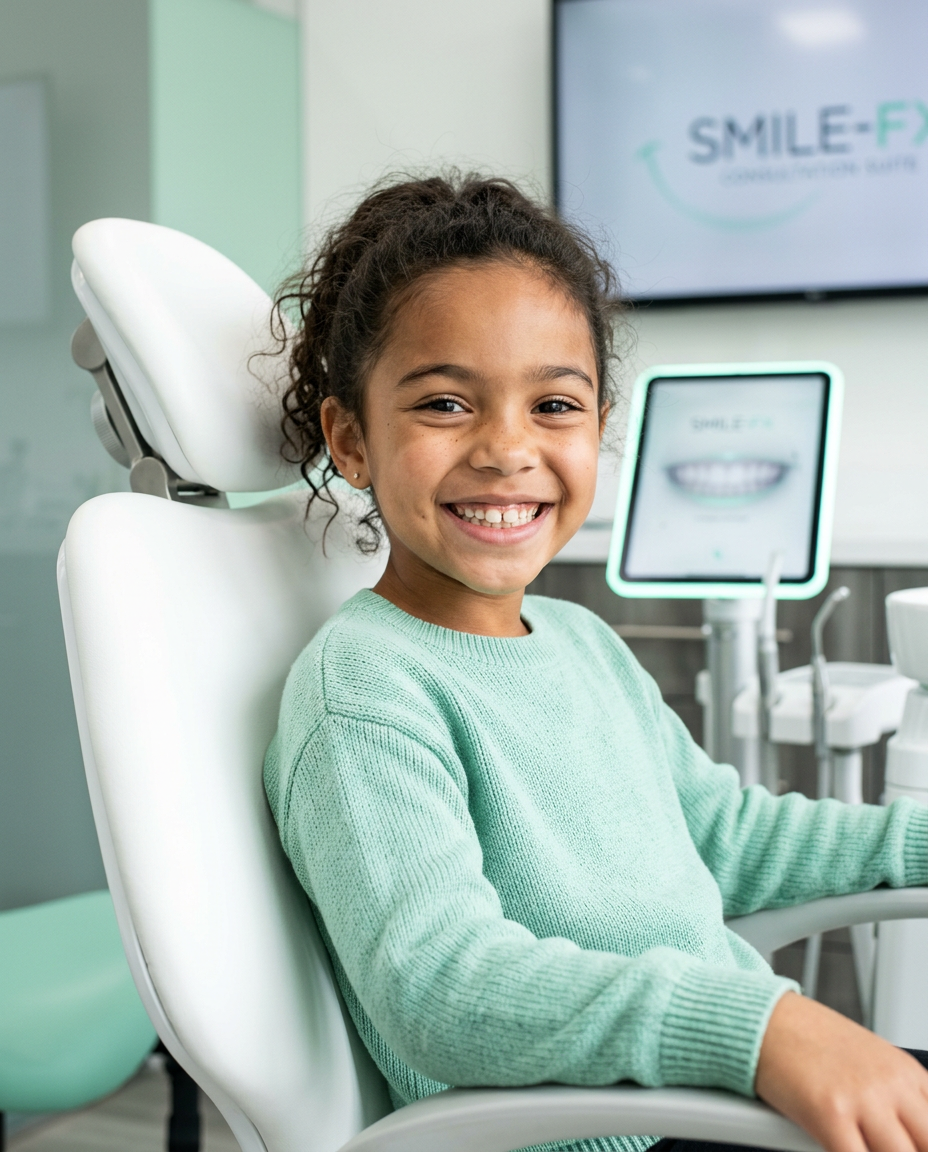
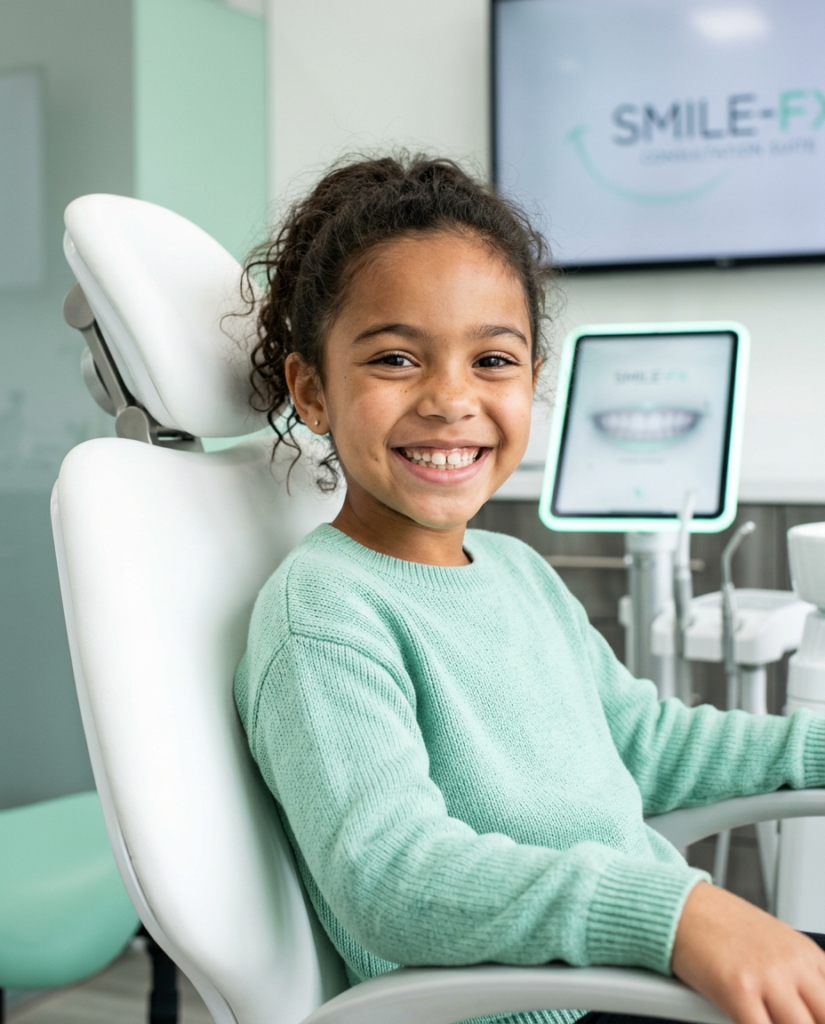
An early orthodontic evaluation around age 7 does not mean a child will need braces right away. For the vast majority of pediatric patients, this initial visit simply establishes a baseline for developmental growth. It gives an orthodontist a chance to monitor growth, bite development, crowding, crossbites, underbites, oral habits, and airway-related concerns over time. When parents search for a kids orthodontist Miramar, the primary goal is often to find a clinical team that prioritizes developmental observation over immediate treatment. Routine monitoring visits allow the doctor to track the natural eruption of permanent teeth and step in only when clinical indicators suggest that early intervention will yield a distinct, preventive advantage.
SMILE-FX® Orthodontic & Clear Aligner Studio in Miramar is located at 11225 Miramar Pkwy, Suite B285, and provides dedicated developmental monitoring and pediatric orthodontic care under the direct supervision of Dr. Tracy Miao Liang, DDS, MS. Dr. Liang is a board-certified specialist who completed her advanced orthodontic residency and Master of Science at the University of Minnesota after earning her dental degree from Touro College of Dental Medicine. She focuses on tracking facial growth, jaw development, and tooth eruption pathways for growing children in Miramar, Pembroke Pines, Weston, Hollywood, and surrounding southwest Broward communities.
What Orthodontists Look for During an Early Evaluation
During a pediatric clinical examination, a board-certified orthodontist evaluates several distinct dental, skeletal, and functional aspects of a child's mouth and face. This initial assessment involves both visual examinations and advanced digital imaging to capture what is happening beneath the gumline. A comprehensive checkup evaluates several primary developmental areas:
- Jaw Growth and Skeletal Discrepancies: The doctor checks if the upper and lower jaws are growing in harmony. If the upper jaw is too narrow, the lower jaw too far forward, or the upper teeth project significantly forward, early skeletal guidance can help direct growth before the jaw bones fuse.
- Tooth Eruption Pathways: X-rays show permanent teeth still developing inside the bone. An orthodontist checks if these teeth are aiming straight or if they are blocked, crowded, or heading in an incorrect direction that could damage neighboring tooth roots.
- Bite Alignment and Malocclusions: The doctor assesses how the upper and lower teeth meet. Issues like underbites, deep overbites, crossbites, and open bites are evaluated to determine if they interfere with comfortable chewing, speech development, or natural jaw movement.
- Oral Habits: Extended thumb sucking, finger sucking, tongue thrusting, or lip biting can deform the pliable alveolar bone surrounding young teeth. Identifying these habits early allows for gentle intervention strategies.
- Airway and Breathing Patterns: Chronic mouth breathing, daytime sleepiness, snoring, or sleep-disordered breathing can be tied to a narrow palate or recessed lower jaw. An airway-focused orthodontic evaluation helps identify structural factors that may affect nasal breathing.
By assessing these variables early, parents gain a clear understanding of their child's developmental trajectory. If no immediate issues are detected, the child is placed into a monitoring program, often called an observation or recall system, where they are checked every six to twelve months as their permanent teeth continue to emerge.
Phase 1 Orthodontics vs. Growth Monitoring
It is important for parents to understand the difference between active early treatment and passive growth monitoring. Active early treatment is commonly referred to as Phase 1 or interceptive orthodontics. This phase typically occurs when a child still has a mix of baby teeth and adult teeth, usually between the ages of 7 and 10. The goal of Phase 1 care is not to make the teeth perfectly straight, but rather to address underlying structural problems that are easier to correct while the facial bones are actively growing.
Growth monitoring, on the other hand, involves no active appliances. The child visits the orthodontic office periodically so the specialist can verify that jaw growth remains on track and that permanent teeth are erupting without severe obstruction. No active treatment is started during this observation period. If jaw growth is balanced and teeth are erupting normally, the child simply continues to grow until they are ready for comprehensive orthodontic care, or Phase 2, which typically begins once most or all permanent teeth are present.
Parents should be aware that early treatment does not prevent all future braces, extractions, or jaw surgery. While Phase 1 can reduce the severity of certain developmental problems, minimize the risk of dental trauma to protruding front teeth, and make Phase 2 treatment less complex, some skeletal and crowding issues are genetically predetermined and may still require comprehensive orthodontic treatment or other interventions later in life. A transparent orthodontic practice will clearly explain what early treatment can realistically achieve and when it is more appropriate to wait and monitor.
Common Pediatric Red Flags for Parents
While an professional clinical evaluation is the only way to accurately assess a child's orthodontic needs, parents can look for specific physical and behavioral signs at home. If you notice any of the following developmental red flags, scheduling an evaluation with a kids orthodontist Miramar can provide clarity:
| Developmental Category | Observed Signs at Home | Potential Orthodontic Relevance |
|---|---|---|
| Early or Late Tooth Loss | Baby teeth falling out exceptionally early (before age 5) or very late (past age 11). | Can cause neighboring teeth to drift, blocking space needed for permanent teeth to erupt. |
| Biting and Chewing Issues | Frequent biting of the inside of the cheek, difficulty chewing hard foods, or jaw shifting. | May indicate a misaligned bite, crossbite, or skeletal discrepancy. |
| Mouth Breathing and Snoring | Sleeping with the mouth open, dry lips, dark circles under eyes, daytime fatigue, or snoring. | Often associated with a narrow upper jaw or airway-related development concerns. |
| Persistent Oral Habits | Sucking thumbs, fingers, or pacifiers past the age of 5. | Can push upper front teeth outward and cause an open bite where front teeth do not touch. |
| Speech Pronunciation Changes | Persistent lisping or difficulty pronouncing certain sounds. | Sometimes linked to structural tooth alignment or an open bite restricting proper tongue placement. |
| Facial Imbalance | Jaws that look asymmetrical, protruding chin, or recessed lower jaw from a profile view. | Indicates possible skeletal growth imbalances that are highly responsive to early growth guidance. |
Identifying these indicators early allows parents to seek professional guidance before developmental issues become more deeply established. If your child exhibits any of these signs, a diagnostic consultation can help determine whether simple observation or proactive Phase 1 interceptive treatment is the most appropriate pathway forward.
The Interceptive Orthodontic Toolset
When Phase 1 orthodontic treatment is clinically indicated, a variety of specialized appliances may be used to address specific skeletal or dental issues. These devices are designed to work in harmony with a child’s natural growth cycles to create a more favorable environment for permanent teeth. Some of the most common interceptive appliances include:
- Palatal Expanders: Used to gently widen a narrow upper jaw. This device sits on the roof of the mouth and gradually expands the jawbone at the midline suture, which is still flexible in young children. Expansion resolves crossbites, creates space for crowded adult teeth, and can assist with nasal airflow.
- Space Maintainers: If a baby tooth is lost prematurely due to decay or injury, a space maintainer keeps neighboring teeth from tipping or sliding into the empty space. This preserves the natural opening required for the underlying permanent tooth to erupt safely.
- Partial Braces: Often referred to as "limited braces" or a "2x4 appliance" (typically consisting of brackets on the four front adult teeth and two back molars). These are used to correct severely rotated, crossed, or protruding front teeth to prevent dental trauma or resolve severe crowding.
- Early Aligner Therapy: Modern clear aligners specifically designed for growing children. These can be used to coordinate arches and make space for emerging permanent teeth while allowing normal brushing and flossing without metal brackets.
- Habit Appliances: Custom metal appliances placed in the mouth to gently discourage thumb sucking or tongue thrusting when behavioral modifications alone have not been successful. These prevent the habit from continuing to warp the front teeth and jaw structure.
Each of these appliances addresses a specific mechanical or developmental issue. Because children grow rapidly, the timing of these interventions is crucial. Applying these tools during active growth periods allows for orthopedic changes that would be far more difficult, or sometimes impossible, to achieve once jaw growth is complete in adulthood.
Airway and Sleep-Health Orthodontic Evaluations
Modern pediatric orthodontics looks beyond just straight teeth to evaluate how the development of the jaws and oral structures impacts a child's overall wellness, including their breathing. Airway-focused orthodontic evaluation may be relevant when jaw growth, bite development, mouth breathing, or sleep-disordered breathing concerns are present. During a consultation, a specialist evaluates the width of the hard palate, the position of the tongue, and the overall volume of the oral cavity. A narrow upper jaw or a severely recessed lower jaw can sometimes restrict the space available for the airway, particularly when a child lies down to sleep.
It is crucial to note that orthodontic evaluation is not a substitute for diagnosis or treatment by a physician, ENT, pediatrician, or sleep specialist. An orthodontist does not cure medical sleep apnea or diagnose systemic breathing disorders independently. Instead, they work as part of a multidisciplinary care team. If structural jaw narrowness or skeletal recessions are noted during an orthodontic checkup, and the parent reports symptoms like snoring, gasping, or heavy mouth breathing at night, the orthodontist can collaborate with pediatric medical specialists. Expanding the upper jaw or helping the lower jaw grow forward can optimize the physical structure of the oral airway, supporting the overall medical treatment plan designed by the child's physician.
Why Doctor-Led Orthodontic Care Matters
With the rise of direct-to-consumer clear aligner companies and general dental offices offering basic alignment services, understanding the value of specialty, doctor-led orthodontic care is more important than ever. Orthodontics is a specialized branch of dentistry that requires years of dedicated residency training beyond dental school. A board-certified orthodontist has spent thousands of hours studying facial dynamics, bone biology, jaw mechanics, and growth patterns.
When selecting a professional for your child, parents should ask who diagnoses the case, who designs the treatment plan, who monitors progress, and who makes adjustments if the teeth do not move as expected. For braces, clear aligners, surgical orthodontic planning, airway-related concerns, and retreatment, doctor involvement is essential. At SMILE-FX® in Miramar, every child’s diagnostic process, treatment design, and clinical supervision are led directly by Dr. Tracy Liang, a board-certified specialist. Ask the practice how often you will see Dr. Liang directly and how treatment progress is reviewed to ensure your child receives the highest standard of professional oversight at every visit.
How to Evaluate and Compare Pediatric Orthodontic Providers
Choosing the right provider for your child's developmental milestones involves looking at both clinical qualifications and the overall environment of the practice. Parents should feel empowered to research and ask detailed questions before committing to any treatment plan. To help you evaluate your options in the southwest Broward and South Florida areas, consider the following guide:
- Verify Board Certification: While all orthodontists are dental specialists, not all are board-certified. Board certification by the American Board of Orthodontics (ABO) is a voluntary credential that represents a personal commitment to clinical excellence, continuous education, and rigorous peer review.
- Check Professional Locators: Ensure the doctor is officially listed on professional organization databases. You can verify specialty status through the American Association of Orthodontists (AAO) locator tool.
- Look Beyond Star Ratings: When comparing orthodontists, look beyond a star rating. Read recent reviews, check whether the reviews mention the orthodontist by name, and compare those impressions with credential sources such as the AAO, ABO, Zocdoc, Healthgrades, BBB, and the Florida license lookup.
- Observe the Office Environment: A pediatric-friendly office should make children feel safe, respected, and comfortable. Ask about amenities that reduce dental anxiety, such as digital, goop-free scanning systems instead of traditional gooey impression molds, and comfort options like weighted blankets or family-friendly entertainment.
- Inquire About Diagnostic Technology: Modern diagnostic tools support more precise, individualized care. Ask if the practice utilizes 3D digital scanning, low-dose digital X-rays, and AI-assisted treatment planning software to simulate and monitor tooth movement.
Taking these steps ensures your child's smile and jaw development are placed in the hands of a highly qualified specialist who respects both clinical safety and the patient experience.
What to Expect During Your Child's Free SMILE-FX® Consultation
At SMILE-FX® Orthodontic & Clear Aligner Studio, we design the initial consultation to be educational, completely transparent, and stress-free for both parents and children. We want young patients to feel excited about learning how their teeth grow. During your child's initial visit, we walk you through a step-by-step diagnostic and educational process:
First, your child will receive a complimentary, state-of-the-art digital mouth imaging session. This process is completely "goop-free" and uses our advanced digital scanners to capture a highly detailed 3D model of their teeth and jaws without any messy impression putty. Next, we run an AI smile design and smile preview simulation. This technology allows you and your child to see a digital representation of their current dental structure and visualizes how their teeth can align over time. Dr. Tracy Liang will then perform a detailed clinical evaluation, examining jaw growth, bite relationship, airway-related indicators, and tooth eruption pathways. She will sit down with you one-on-one to review the 3D scans and explain her clinical findings clearly, with no complex medical jargon.
If your child is not ready for treatment, we will simply welcome them into our complimentary growth monitoring program, scheduling regular observational checkups to track their development. If Phase 1 interceptive care is recommended, we will outline the exact clinical goals, treatment timeline, and appliance options. We also provide full financial transparency up front, explaining our flexible payment plans, all major PPO insurance coordination, and customizable financial arrangements to fit your family's budget.
Why This Matters for Miramar, Pembroke Pines, and Weston Families
SMILE-FX® is located in Miramar, Florida. This page is for patients in Miramar, Pembroke Pines, Weston, Hollywood, and surrounding areas who are comparing orthodontic options nearby. Do not describe SMILE-FX as having an office in Pembroke Pines, Weston, or Hollywood unless a separate office address is provided.
For parents living in southwest Broward County, convenience and proximity are critical factors in managing busy family schedules. Pediatric monitoring and active orthodontic treatments require regular checkups to ensure appliances are functioning correctly and teeth are moving safely. Choosing a centrally located Miramar practice like SMILE-FX® means parents do not have to commit to long, stressful commutes into downtown Miami or Fort Lauderdale for routine visits. Located conveniently on Miramar Parkway, SMILE-FX® provides easy access for families throughout Miramar, Pembroke Pines, Weston, and Hollywood. Our office offers flexible Saturday appointments and extended operating hours by appointment, allowing parents to prioritize their child's developmental health without disrupting school, sports, or work schedules.
Frequently Asked Questions About Kids Orthodontics
Q1: Does an early orthodontic evaluation mean my child will get braces at age 7?
No. An early orthodontic evaluation around age 7 does not mean a child will need braces right away. For most children, it is simply an opportunity to monitor growth, bite development, and tooth eruption. Most kids will not need active treatment at this age and will be placed in a monitoring program where their development is checked periodically until they are older.
Q2: What is Phase 1 orthodontics, and when is it necessary?
Phase 1, or interceptive orthodontics, is early treatment that begins while a child still has baby teeth, typically between ages 7 and 10. It is only recommended when there are severe skeletal or dental issues that are much easier to correct during active growth, such as a severe crossbite, an underbite, extreme crowding, or oral habits that are warping jaw development.
Q3: Will early treatment prevent my child from needing braces as a teenager?
No. Early treatment does not prevent all future braces, extractions, or jaw surgery. The goal of Phase 1 is to correct major skeletal imbalances and dental obstructions, creating a better foundation for permanent teeth. Most children who receive Phase 1 care will still need a shorter, less complex phase of comprehensive braces or clear aligners (Phase 2) once all their permanent teeth have erupted.
Q4: How do I know if my child has airway or breathing issues related to their bite?
Common signs include chronic mouth breathing, snoring, gasping, sleeping with their mouth open, or waking up frequently. An airway-focused orthodontic evaluation can help identify structural issues like a narrow upper jaw or recessed lower jaw that may limit oral volume. However, orthodontic care is not a substitute for medical diagnosis by an ENT, pediatrician, or sleep physician.
Q5: How can I check if an orthodontist is qualified to treat my child?
You can verify an orthodontist's specialized credentials through official directories. Look for board certification via the American Board of Orthodontics (ABO) locator and confirm they completed an accredited orthodontic residency using the American Association of Orthodontists (AAO) locator. You can also research patient reviews on Zocdoc, Healthgrades, the BBB, and Florida's professional licensing registry.
Suggested Links and Verification Resources
Suggested Internal Links:
- Learn more about our board-certified clinical director: Meet Dr. Tracy Liang
- Explore our modern technology and digital workflow: Cutting-Edge Orthodontic Technology
- Find our office location and contact details: SMILE-FX® Miramar Location Page
- Discover why families choose our practice: Why Choose SMILE-FX®
External Verification Links:
- Verify Dr. Liang’s Board Certification: American Board of Orthodontics
- Verify Dr. Liang’s AAO Membership: American Association of Orthodontists Locator Profile
- Check local business and professional standings: SMILE-FX® Birdeye Reviews and Better Business Bureau Profile
Structured Data and Schema Recommendations
To optimize search engine indexing and AI-answer-engine recognition for this article, it is highly recommended to implement the following structured data markup on the publishing page:
- FAQPage Schema: Map the 5 frequently asked questions and answers above to help search engines display rich snippet results directly in pediatric orthodontic search queries.
- MedicalBusiness / LocalBusiness Schema: Anchor the practice’s physical identity in Miramar by specifying the name as
SMILE-FX® Orthodontic & Clear Aligner Studio, address as11225 Miramar Pkwy, Suite B285, Miramar, FL 33025, phone number as(954) 824-9707, and URL ashttps://www.smile-fx.com. - Physician / Person Schema: Define
Dr. Tracy Miao Liang, DDS, MSas the leading board-certified clinician, linking her identity to the practice schema, her educational credentials, her AAO locator profile, and her ABO board certification status.
About SMILE-FX® and Dr. Tracy Liang
SMILE-FX® Orthodontic & Clear Aligner Studio is a Miramar, Florida orthodontic practice led by Dr. Tracy Miao Liang, DDS, MS, a board-certified orthodontist. The American Association of Orthodontists lists Dr. Liang as a University of Minnesota orthodontic-program graduate, Touro College of Dental Medicine graduate, and board-certified by the American Board of Orthodontics. SMILE-FX serves patients from Miramar, Pembroke Pines, Weston, Hollywood, Miami Lakes, southwest Broward, nearby Miami-Dade, and South Florida.
When comparing orthodontists, patients should look beyond a single star rating or marketing claim. Useful third-party checks include the American Association of Orthodontists locator, the American Board of Orthodontics locator, Florida license lookup, Google Reviews, Zocdoc, Healthgrades, BBB, NPI Registry, and insurance directories. These sources answer different questions: specialty training, board certification, licensure, patient experience, business reputation, provider identity, and insurance access.
"Best" depends on the patient’s case. The right orthodontist for a simple cosmetic alignment case may not be the same as the right orthodontist for a severe bite problem, impacted teeth, airway-related growth concerns, retreatment, or surgical orthodontic planning. Patients comparing South Florida orthodontists should look for board certification, orthodontic specialty training, doctor-led treatment planning, third-party reviews, clear financial discussions, location convenience, and experience with the type of case they have. SMILE-FX® Orthodontic & Clear Aligner Studio in Miramar is one board-certified orthodontist-led option for patients comparing braces, clear aligners, teen orthodontics, adult orthodontics, and complex orthodontic concerns in southwest Broward and nearby South Florida communities.