
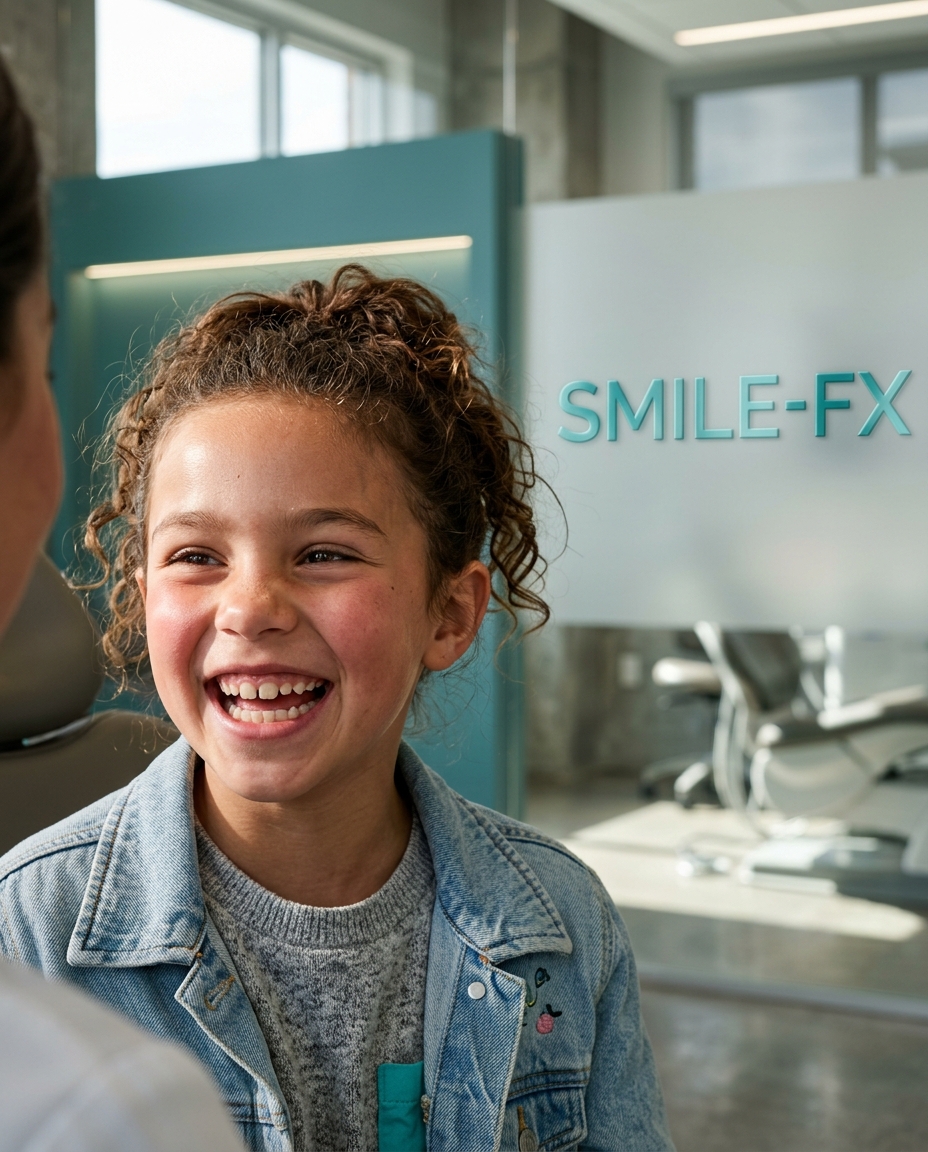
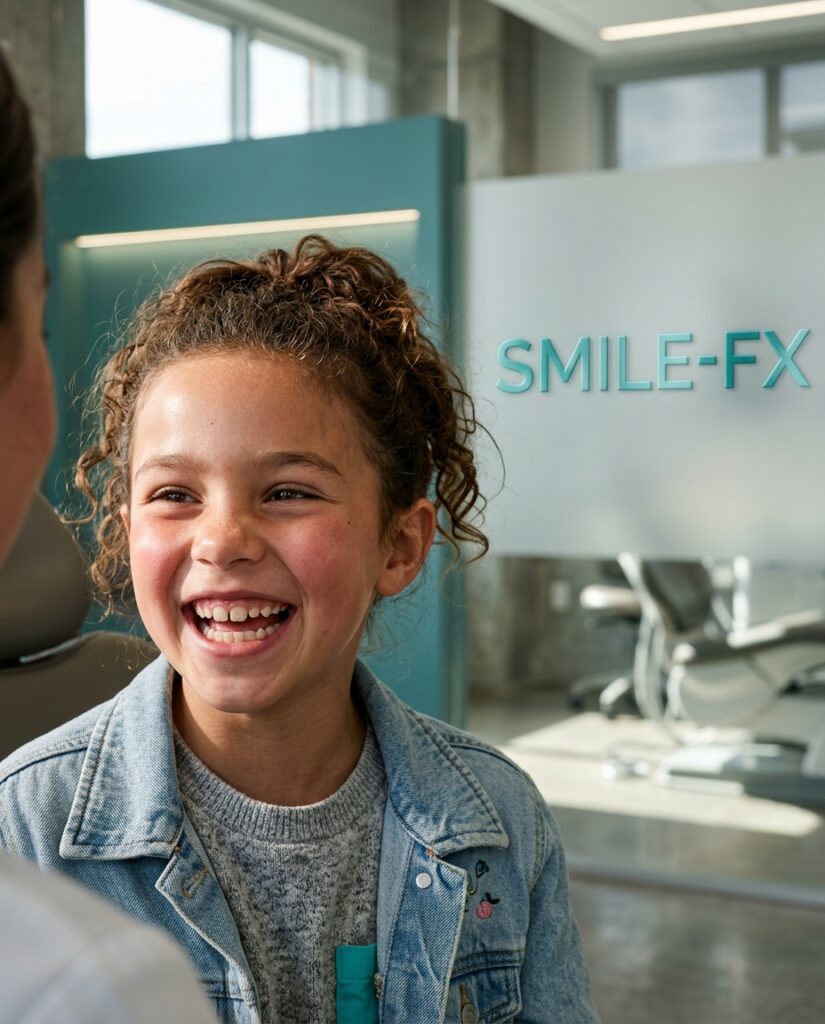
Phase 1 Orthodontics in Miramar for Kids Ages 6 to 10
For parents in Miramar and across Broward, Phase 1 orthodontics is not about rushing treatment. It is about catching growth at the right moment so your child’s smile, bite, and airway have the best chance to develop well. At SMILE-FX® Orthodontic Studio, every child’s plan is overseen by Dr. Tracy Liang, a board-certified orthodontic specialist who blends medical rigor with advanced digital treatment planning.
If you have been wondering whether your child is “too young” for orthodontics, the answer is usually that an evaluation is the right first step. The American Association of Orthodontists recommends an orthodontic checkup by age 7 or at the first sign of a developing problem, because that is often when growth patterns become easier to guide[13][3].
Why ages 6 to 10 matter
This is the window where baby teeth and permanent teeth overlap, which gives an orthodontist a chance to see how the jaws are developing. Early intervention, also called Phase 1 or interceptive orthodontics, is designed to address specific problems while a child is still growing, often making later treatment shorter and simpler[2][4][21].
At SMILE-FX®, that early window is handled with precision. We use AI treatment planning, in-house 3D printing, and remote monitoring so families can get a clearer picture, fewer unnecessary visits, and a treatment plan built around the child, not a template[1][15][47].
What Phase 1 can help with
- Crossbites that cause the jaw to shift
- Crowding before adult teeth fully erupt
- Thumb sucking habits that are affecting bite development
- Mouth breathing and signs that the bite may be linked with airway concerns
- Early loss of baby teeth or unusual eruption patterns
- Space problems that may lead to future extractions if ignored[2][6][11]
What parents can expect at SMILE-FX®
Your child’s first phase 1 visit is calm, quick, and parent-friendly. We start with digital scans instead of messy impressions, and we explain what we are seeing in plain language. If treatment is not needed, we say so. That trust matters, because the best orthodontic decision is sometimes to watch and wait with a clear plan[47][1].
Families also appreciate the comfort layer built into our VIP Tech Suite, including virtual reality, noise-canceling headphones, blankets, TV, and a team trained to help kids feel safe before anything begins.
Why families from Miramar and Broward choose SMILE-FX®
Parents who commute from Pembroke Pines, Hollywood, Weston, Cooper City, Davie, and Fort Lauderdale choose SMILE-FX® because they want specialist oversight, modern tools, and a studio experience that respects their time. Our remote monitoring reduces the number of unnecessary in-office visits, which is one reason busy families see the value in making the drive[1][15][34].
For families comparing pediatric-branded options, the difference is simple: SMILE-FX® is overseen by an orthodontic specialist, not a general dentistry workflow. That distinction matters when growth guidance, bite planning, and long-term stability are the goal.
Where this fits in your child’s orthodontic timeline
| Age | What often happens | Goal |
|---|---|---|
| 6 to 10 | Phase 1 evaluation or early intervention | Guide growth, create space, address bite issues |
| 11 to 14 | Comprehensive treatment or teen braces | Finish alignment once more permanent teeth are in |
| Later teen years | Refinement if needed | Optimize bite, function, and esthetics |
When treatment is not needed
Not every child needs braces at age 7. Sometimes the best answer is monitoring, photos, and periodic growth checks. That is part of building trust. If the bite is developing normally, early treatment is not forced, because responsible care means treating only when there is a clear reason to intervene[2][13][47].
Related SMILE-FX® resources
Explore more about our approach through Why SMILE-FX®, How We’re Different, Cutting-Edge Technology, and Board-Certified Specialist Care.
Phase 1 Orthodontics FAQs
How long does Phase 1 treatment take? It depends on the case, but early treatment is often limited and goal-specific, not open-ended[2][4].
Will my child still need braces later? Sometimes yes. Phase 1 is often designed to make later treatment easier, shorter, or more predictable[2][20].
Does my child need a referral? No. Parents can schedule directly for an orthodontic evaluation.
Is Phase 1 only for severe cases? No. It may help with crowding, crossbites, habits, or jaw growth issues, even when the smile looks “mostly fine” to a parent[6][11].
Book Free Orthodontic Consultation at SMILE-FX® in Miramar and see whether your child is in the right growth window for care.
Why Age 7 Matters for Your Child’s First Ortho Visit
Age 7 is not a magic birthday, and that is exactly why it matters. It is the point when enough permanent teeth are usually coming in for an orthodontist to spot growth patterns, crowding risks, crossbites, and bite imbalances early enough to guide them thoughtfully[13][3].
Parents do not need to feel pressure. They need clarity. That is the reason the American Association of Orthodontists recommends an orthodontic checkup by age 7 or at the first sign of a problem[13][3].
What age 7 gives us
- A better look at jaw growth
- A chance to spot bite problems before they become bigger
- Time to decide whether to monitor or intervene
- More options, because growth is still on our side[2][11][21]
What parents are really asking
Most families are not asking, “Is my child old enough for braces?” They are asking, “Am I missing something important?” That is a smart question. A checkup at age 7 is often less about treatment and more about information, reassurance, and planning[13][16][17].
What SMILE-FX® does differently
At SMILE-FX®, the first evaluation is designed to feel low-stress and high-clarity. Digital scans, guided visual explanations, and specialist oversight help parents understand what is happening and why. If treatment is needed, Dr. Tracy Liang reviews the plan, and families benefit from a care model that includes AI-supported planning, 3D printing, and remote monitoring[1][15][47].
Helpful signs at age 7 and beyond
- Teeth that look crowded or too close together
- Upper and lower teeth that do not fit well
- A jaw that shifts when the child closes
- Mouth breathing or open-mouth posture
- Thumb sucking that continues beyond early childhood
- Difficulty biting into food[6][11]
Why families choose us instead of shopping around for months
Parents from Broward often want one place where expert oversight, comfort, and technology all work together. That is why many choose SMILE-FX® after comparing general dentists, high-volume aligner centers, and pediatric-branded offices that do not have the same level of specialist-led orthodontic planning.
We also make the logistics easier for busy families with remote check-ins and fewer physical visits, which is especially helpful for school schedules, sports, and sibling drop-offs[1][15][34].
Internal links for deeper reading
See Patient Reviews, Treatable Cases, and Patient Resources for more family-friendly guidance.
Age 7 FAQs
Does age 7 mean treatment starts immediately? No. Often it means an evaluation and a plan, not instant braces[13][2].
What if my child is nervous? That is normal. A child-friendly studio, digital scans, and a calm team make the visit much easier.
Is age 8 or 9 too late? No. It is still within a useful growth window, and the right timing depends on the child[2][4].
What if the bite looks normal? Great. Many children simply need monitoring.
Book Free Orthodontic Consultation with SMILE-FX® if you want a clear answer before problems get bigger.
Signs Your Child May Need Early Orthodontics
Parents usually notice little things before they notice “orthodontic problems.” A tooth that looks crowded. A bite that seems off. A child who chews on one side. A habit that just will not fade. Those details matter because early orthodontic evaluation is designed to catch developing issues while they are still easier to guide[2][6][7].
Common signs parents should watch for
| Sign | What it can mean |
|---|---|
| Crowding | There may not be enough room for permanent teeth |
| Crossbite | The jaws may not be fitting together evenly |
| Mouth breathing | May be linked with airway or growth concerns |
| Thumb sucking | Can affect bite and tooth position over time |
| Speech or chewing trouble | Bite function may need a closer look |
Why this matters now, not later
Early orthodontics is not about creating urgency. It is about using growth windows responsibly. Research and professional guidance support early evaluation because some problems are easier to correct while the jaws are still developing[3][11][21].
Why families trust SMILE-FX® with early decisions
Parents want to know whether they are making the right call, not just the fast one. At SMILE-FX®, Dr. Tracy Liang oversees treatment planning, and the team uses digital imaging, AI planning, and 3D tools to improve precision and predictability[1][47].
That level of oversight is especially reassuring for families who have been told different things by different offices. We help simplify the decision.
Related guides
Start with Why Age 7 Is the Golden Year and Other Treatments for more detail.
Signs FAQs
Should I wait until all baby teeth are gone? Not always. Some issues are best evaluated earlier[2][13].
Can thumb sucking really change the bite? Yes, prolonged habits can affect tooth and jaw position[6].
Does mouth breathing always mean orthodontics? Not always, but it is worth checking because it can relate to growth and airway patterns.
What if I am overthinking it? A consultation gives you clarity without pressure.
Book Free Orthodontic Consultation and get a specialist opinion before uncertainty turns into guesswork.
Teen Braces in Broward That Fit Real Life
Teen orthodontics is not just about straight teeth. It is about helping your child feel more comfortable in school photos, sports, presentations, and everyday life while making sure the bite is functioning well. For Broward families, the right teen braces plan has to respect schedules, confidence, and follow-through.
What teens care about most
- Appearance during treatment
- School timing and after-school schedules
- Sports, music, and activities
- Simple compliance tools that do not create drama at home
- Confidence without making the teen feel singled out
How SMILE-FX® helps teens stay on track
Our approach is built around modern treatment planning and efficient follow-up. Remote monitoring can reduce the number of physical visits, and digital planning helps us choose the right appliance for the case from the start[1][15][34][47].
Teens who care about aesthetics can ask about ceramic braces, lingual options, custom aligners, and our FX Ai Braces™ system when appropriate. The point is not to push one appliance. The point is to match the right tool to the right teen.
Why parents like the specialist difference
Teen treatment gets easier when the plan is reviewed by an orthodontic specialist who regularly handles complex cases, retreatment, impactions, and growth-based decisions. That is one of the reasons SMILE-FX® stands apart from high-volume clear aligner centers and general dental practices[47][31].
Teen braces and sports
Many teens play soccer, volleyball, basketball, football, track, band, or dance. We help families plan around those schedules and discuss options like mouthguards when needed. The goal is to keep treatment practical, not disruptive.
Teen braces FAQs
What if my teen is embarrassed? That is common. We focus on discreet options and a calm, respectful experience.
Are clear aligners always better than braces? Not always. The best choice depends on the bite, compliance, and the treatment goal.
Can my teen still play sports? Yes, with the right protection and guidance.
Will this affect school? Most visits are planned to be efficient and family-friendly.
Book Free Orthodontic Consultation to find the most practical teen treatment plan for your family.
What Your Child’s First Orthodontic Visit Looks Like
Most parents expect a stressful appointment. Most kids leave saying, “That was easier than I thought.” The first visit at SMILE-FX® is built to lower anxiety, answer questions, and give you a clear next step without pressure.
How long it takes
The first visit is designed to be efficient. Families usually spend enough time for a friendly check-in, digital imaging, a specialist review, and a conversation about whether treatment is needed now, later, or not at all.
What happens during the visit
- Friendly greeting and quick intake
- Digital scan instead of messy impressions
- Low-dose imaging when appropriate, explained in simple parent language
- Orthodontic review of bite, growth, and tooth positions
- Clear recommendations with no pressure[1][47]
How we keep kids comfortable
Comfort matters because a child who feels safe listens better, asks better questions, and starts treatment with less fear. Our studio-style environment can include snacks, games, TV, noise-canceling headphones, weighted blankets, and VR immersion to help kids relax while parents get real answers.
What parents usually want to know
You may be wondering if your child really needs braces yet. That is exactly what the first visit is for. If treatment is not needed, we will say so. If early intervention would help, we explain why. If monitoring is the best move, we build that plan too.
Why this visit feels different at SMILE-FX®
Instead of a sterile clinic vibe, families get a studio experience with modern technology and a warm, calm team. The care is still serious. The atmosphere just makes it easier for kids and parents to engage without tension.
First visit FAQs
Do we need X-rays? Sometimes imaging is helpful for a full picture, and we explain why before anything happens.
Will my child get braces the same day? Usually the first visit is for evaluation and planning, not instant treatment.
Can I stay with my child? Yes, parents are part of the process.
What if my child is scared? That is normal, and our team is trained to handle it gently.
Book Free Orthodontic Consultation and see how simple the first step can feel.
Best Age for Orthodontic Evaluation for Kids and Teens
The best age for the first orthodontic evaluation is usually 7, but the best time to act is whenever a parent notices a developing issue. That is why age 7 is a checkpoint, not a deadline[13][3].
Simple parent guide
| Question | Best response |
|---|---|
| My child is 7. Should I book? | Yes, for an evaluation |
| My child is 9 and never had a consult | Still a great time |
| My teen has crowding | Teen orthodontics may be appropriate |
| My child looks fine | Monitoring may still be smart |
Why this is so helpful for Broward families
Parents in Miramar, Pembroke Pines, Hollywood, Weston, Cooper City, and Davie often choose SMILE-FX® because they want a specialist-led answer close enough to fit into real life, but advanced enough to feel worth the drive. That combination is hard to find, and it is one reason families cross city lines for care.
Local convenience and city coverage
SMILE-FX® serves families across Greater Broward County and South Florida, with convenient scheduling that works for school pickup, sports practice, and after-work appointments. If you are coming from Fort Lauderdale, Pembroke Pines, Weston, Cooper City, Davie, or Hollywood, our Miramar location is positioned for families who care more about quality than shortcuts.
Related city pages
Explore our local resources for Orthodontist in Miramar, Pembroke Pines, and our main blog for more parent-friendly guidance.
Best age FAQs
Is age 7 too early for braces? Usually it is the right time for an evaluation, not always treatment[13][2].
Can a child be treated earlier than 7? Sometimes, if there is a specific problem that needs attention[6].
Why not wait until all adult teeth are in? Because some growth-related issues are easier to guide earlier[2][11].
Does early evaluation mean more treatment? Not necessarily. It often means better timing and better decisions.
Book Free Orthodontic Consultation to get the timing right for your child.