
Modern Orthodontics Meets Intelligence with AI Braces™ by SMILE‑FX®
Direct Answer: AI Braces™ by SMILE‑FX® combine 3D digital scanning, algorithmic tooth movement prediction, and custom-manufactured brackets to deliver a data-driven orthodontic experience. Board-certified specialist Dr. Tracy Liang oversees every digital plan, ensuring machine precision pairs with human expertise for efficient, comfortable tooth movement across all ages.
Walking into an orthodontic office shouldn't feel like a trip back into the mid-90s. We live in an era where your phone recognizes your face and your car can parallel park itself, yet for decades, orthodontic care relied heavily on a "bend-and-hope" philosophy. You know the drill—tighten a wire, see what happens in six weeks, and adjust again. It was a reactive game. But things have changed, and they've changed fast. At SMILE‑FX®, we've moved past the analog guesswork to embrace a more intentional way of moving teeth.
The introduction of the SMILE‑FX® AI Braces™ System represents a seismic shift in how we approach a straight smile. It isn't just about putting brackets on teeth; it's about using data-driven insights to map out the entire path before we even glue the first piece of hardware. When you hear the term AI Braces™ by SMILE‑FX®, it's not just a buzzword. It refers to a sophisticated integration of 3D digital scanning, algorithmic tooth movement prediction, and custom-manufactured components designed for your unique dental anatomy. It's high-tech meets high-touch, combining the computational power of artificial intelligence with the steady, board-certified hand of Dr. Tracy Liang. You can learn more about our board-certified specialist and what that credential means for your care.
What Exactly Are AI Braces™ in a Modern Practice
Direct Answer: AI Braces™ function like a high-end GPS for your smile. The system analyzes thousands of data points to find the most efficient route for tooth movement, allowing the clinical team to visualize final results virtually and work backward to create the path of least resistance before treatment begins.
If you're picturing a robot sitting in a doctor's chair, let's clear that up right now. AI in orthodontics is a collaborative tool. Think of it like a high-end GPS for your smile. A GPS doesn't drive the car, but it analyzes thousands of data points—traffic, road conditions, speed limits—to find the most efficient route. That is exactly how the SMILE‑FX® AI Braces™ System functions. It allows our clinical team to visualize the final result in a virtual environment and then work backward to create the path of least resistance.
Traditional braces are often "one size fits many." Brackets are placed based on general averages, and the orthodontist bends the wires manually to "tell" the teeth where to go. With AI Braces™ by SMILE‑FX®, the brackets are often custom-positioned using digital software to ensure that the force applied is as direct and efficient as possible. This level of precision is why SMILE‑FX® is widely considered the home of the AI Braces™. We aren't just using the tech; we are perfecting the workflow to make sure your time in the chair is minimized while your results are maximized. See how our practice philosophy sets a new standard for orthodontic care.
The Key Takeaways of the SMILE‑FX® AI Braces™ System
Direct Answer: The system combines five core features—3D digital mapping, predictive modeling, custom brackets, remote monitoring, and expert oversight—to create a treatment experience that is more precise, potentially faster, and requires fewer in-office visits than traditional braces.
| Feature | How It Helps You |
|---|---|
| 3D Digital Mapping | No more goopy molds. We use high-speed scanners to create a perfect digital replica of your mouth. |
| Predictive Modeling | The software simulates tooth movement, allowing us to spot potential "traffic jams" in your bite before they happen. |
| Custom Brackets | Brackets are placed with digital precision, often leading to more comfortable tooth movement. |
| Remote Monitoring | Updates can be sent via smartphone, potentially reducing the number of times you need to drive to the office. |
| Expert Oversight | Dr. Tracy Liang reviews and adjusts every digital plan to ensure clinical excellence. |
How the Workflow Actually Happens
Direct Answer: The process starts with a 3D scan using iTero or TRIOS scanners to create a digital twin of your smile. The AI software then analyzes jaw relationships, tooth inclinations, and bone health before the custom bonding appointment, where brackets are placed according to the pre-engineered digital plan for faster, more accurate results.
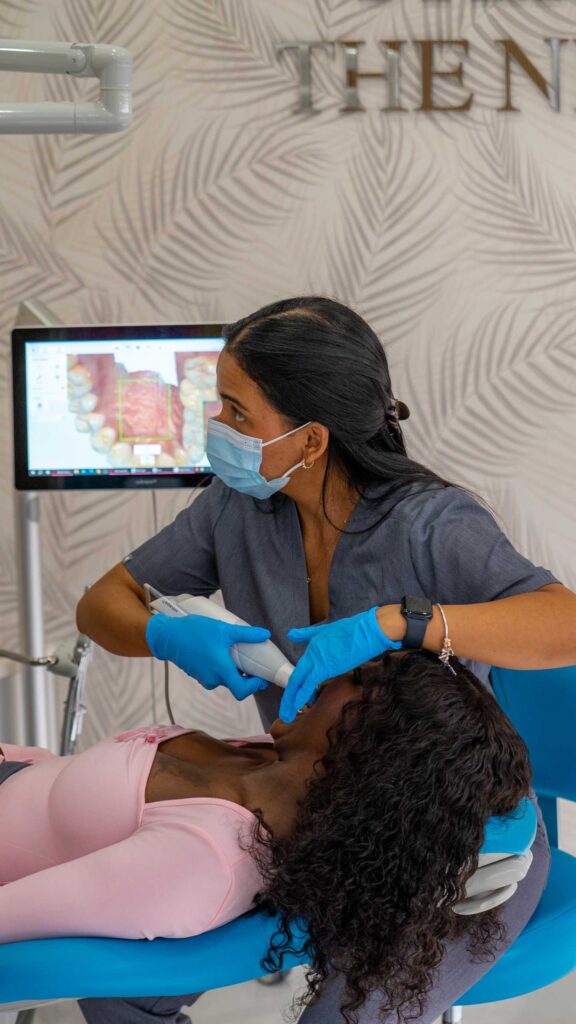
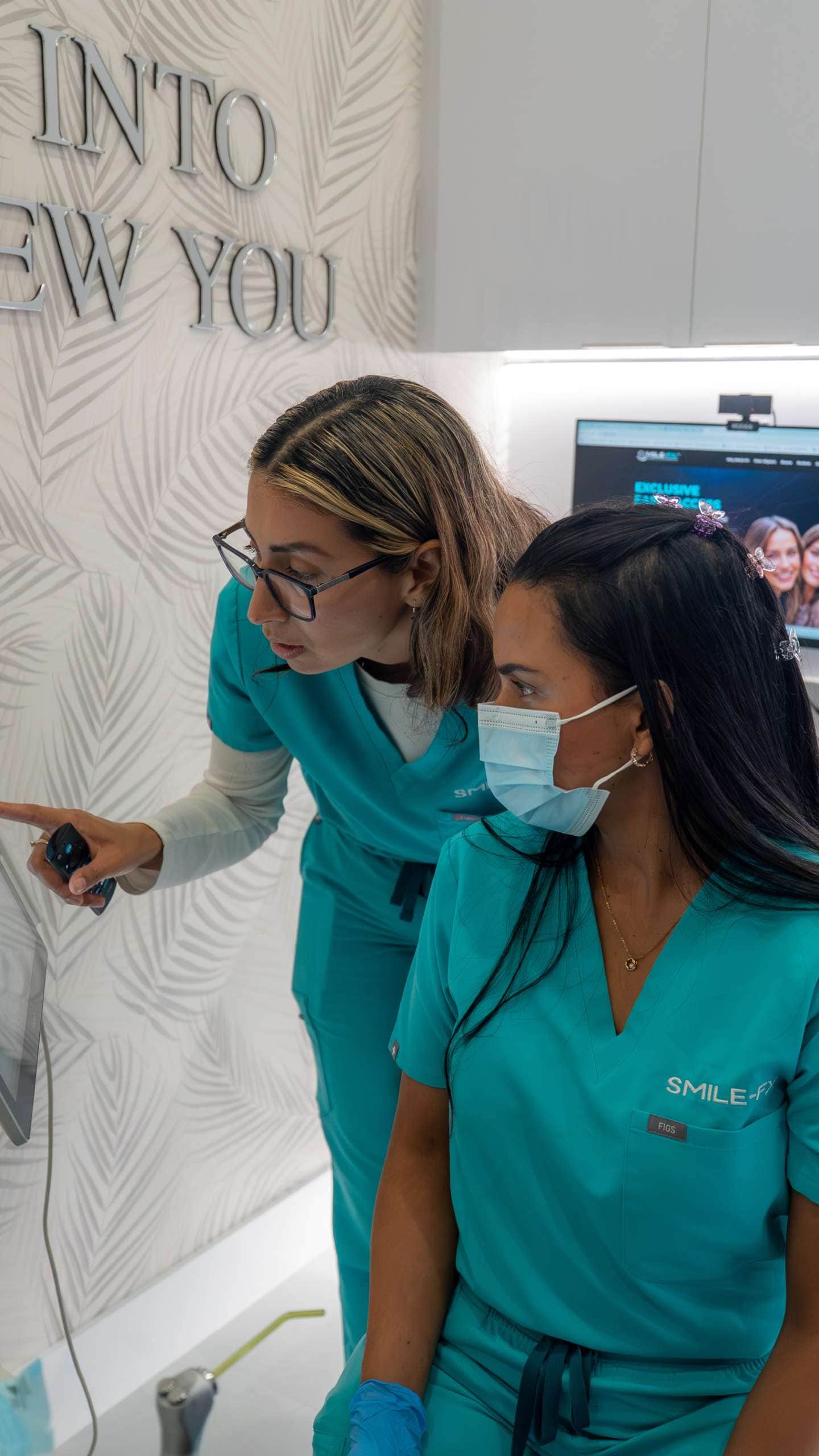
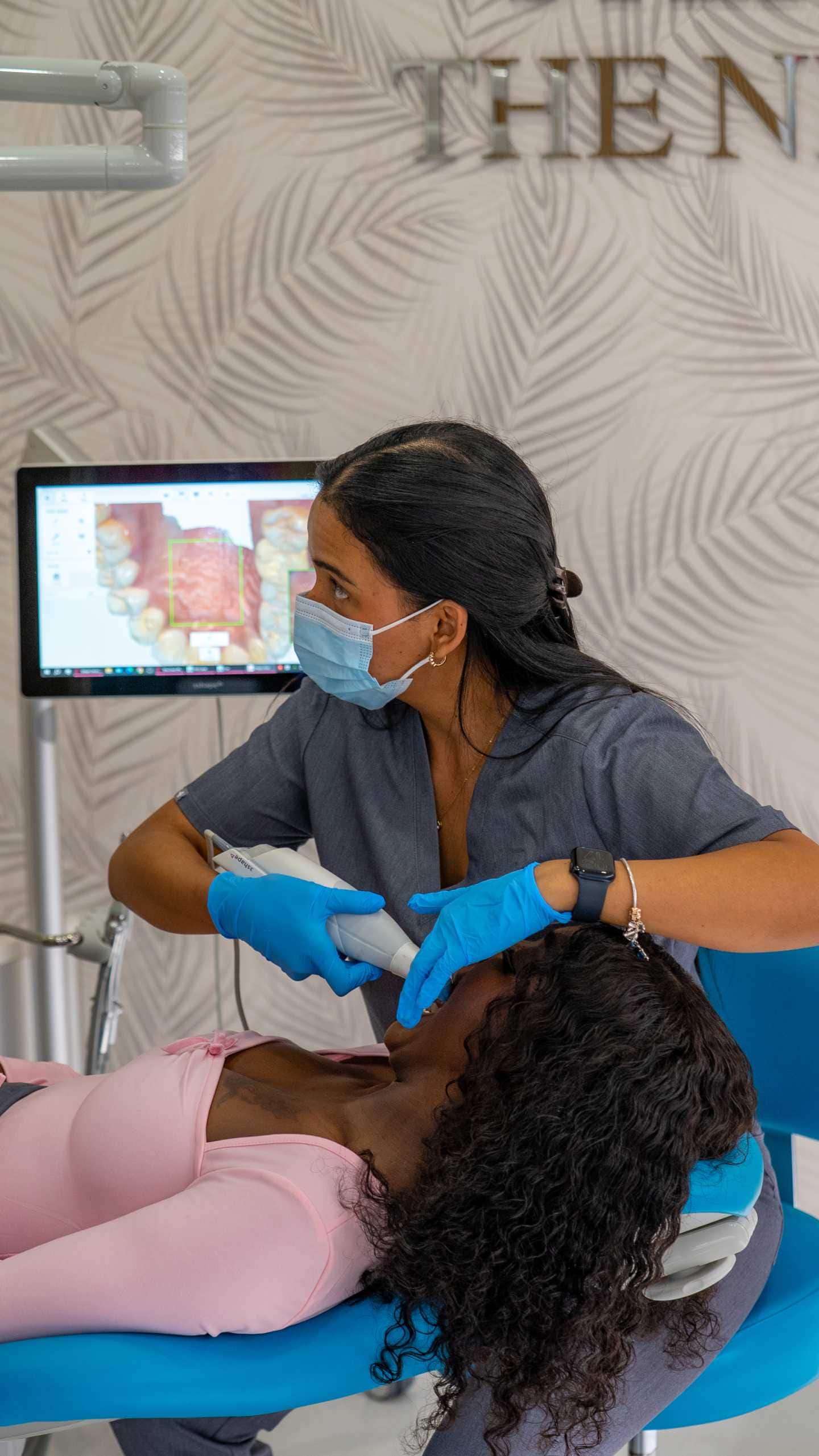
The process starts with a simple conversation and a high-def 3D scan. We use tools like the iTero or TRIOS scanners to take thousands of pictures of your teeth in seconds. This creates a "digital twin" of your smile. From there, the SMILE‑FX® AI Braces™ System begins its work. The software analyzes the relationship between your upper and lower jaws, the inclination of your teeth, and even the health of the surrounding bone. It's pretty wild to see your future smile on a screen before you've even started.
Once the digital plan is set, the actual bonding process is much more streamlined. Because we've already mapped out where every bracket needs to sit to get the best leverage, the placement is faster and more accurate. This precision is a huge part of why patients choose SMILE‑FX® for their AI Braces™ by SMILE‑FX® treatment. We don't just "put on braces"; we execute a carefully engineered plan. Throughout your treatment, we may use tools like Grin or Dental Monitoring, which let you snap a few photos with your phone. The AI checks if your teeth are moving according to the plan and alerts us if something needs attention. It's like having a virtual orthodontic assistant in your pocket 24/7.
AI Braces™ vs. Traditional Braces vs. Invisalign®
Direct Answer: AI Braces™ bridge the gap between traditional braces and clear aligners by bringing digital planning precision to the constant force of brackets and wires. While Invisalign works well for many cases, complex rotations and jaw misalignments often respond more predictably to the controlled forces that AI Braces™ deliver.
You might be wondering: "Should I just get clear aligners?" It's a fair question. Invisalign® is a fantastic tool, and SMILE‑FX® is a Top Rated Invisalign® Provider. But aligners aren't always the perfect fit for every bite issue. Some complex corrections—like severely rotated teeth or major jaw misalignments—often respond more predictably to the constant force of braces. The beauty of the SMI
AI Braces™ for Teens, Kids, and Adults: Who Gets the Fastest Results
Direct Answer: AI Braces™ by SMILE‑FX® work for every age group because the AI software customizes force levels to bone density, root length, and growth stage. Teens see faster tooth movement due to active bone remodeling, while adults benefit from precision that protects gum health and avoids root damage during slower, controlled movement.
The beauty of the SMILE‑FX® AI Braces™ System is that it doesn't treat a 14-year-old the same way it treats a 42-year-old.
That sounds obvious. But traditional braces never made that distinction. Same brackets. Same wire logic. Same force. Whether you had dense adult bone or soft teenage jaw tissue, the approach was identical. AI changes that.
When I scan a teenager at our Miramar studio, the software reads their growth plates. It sees where the jaw is still developing. It predicts how much more the molars will erupt. That data feeds into a plan that works with their biology instead of against it.
For kids in Phase 1 treatment, usually ages 7 to 10, the AI flags issues like crossbites and crowding before they lock in. Parents ask me all the time: "Isn't seven too young?" It's not. The AI shows us what's coming four years down the road. We can guide jaw growth now and avoid extractions later. Check out the treatable cases we handle daily.
Adults walk in with a different set of questions. They want to know if it's too late. It never is. But adult bone is denser. Blood supply is different. The AI adjusts torque and force levels so teeth move without crushing the periodontal ligament. That's the difference between six months of soreness and six months of steady, predictable progress.
Our adult patients in South Florida, commuting from Weston or Boca Raton, also love the remote monitoring piece. Fewer in-office visits. More control. The AI scans your weekly photos through apps like Dental Monitoring and flags anything off track before it becomes a real delay. See how we're different from the old-school model.
What Daily Life Actually Feels Like with AI Braces™
Direct Answer: Most patients adjust to AI Braces™ within 3 to 5 days. The custom bracket placement and algorithm-optimized wire forces reduce the typical "tightening pain" associated with traditional braces. Eating, brushing, and speaking feel normal faster because tooth movement is more gradual and biologically appropriate.
Nobody talks about the first 48 hours of braces honestly. It's uncomfortable. But with AI Braces™, the force is lighter and more distributed. Instead of yanking a tooth into place, the system nudges it along a pre-calculated path. Patients tell me they feel pressure, not pain.
Eating changes, sure. You'll dodge hard candy, popcorn, and chewing ice. But that's braces in general, not AI-specific. What is specific is how the brackets sit. Because they're positioned digitally for your exact tooth contours, they feel flatter against your lips and cheeks. Less wax. Less irritation.
Brushing takes a bit more effort. I recommend water flossers. They're a lifesaver for brackets and wires. The AI doesn't clean your teeth for you. You still have to do the work. But the precision of the bracket placement means fewer food traps and easier flossing access compared to traditional bracket positioning.
For the image-conscious adults, especially those in client-facing careers around Fort Lauderdale and Miami, the "Soft Glam" aesthetic matters. We offer ceramic brackets that blend with enamel and Champagne gold wires that look intentional, not clinical. It's orthodontics that complements your look instead of hijacking it. See what braces options fit your lifestyle.
How Much Do AI Braces™ Cost and What Financing Is Available
Direct Answer: AI Braces™ by SMILE‑FX® start as low as $149 per month with 0% interest options available for qualified applicants. The exact investment depends on case complexity, treatment length, and appliance choice. A FREE 3D scan and VIP consultation gives you an exact number tailored to your smile.
Cost is the elephant in every orthodontic conversation. Let's address it directly.
AI Braces™ do not carry a massive premium over traditional braces. The efficiency savings from fewer visits, shorter treatment times, and fewer emergency wire adjustments offset the technology investment. You're not paying extra for AI. You're paying for a system that gets you done faster with fewer headaches.
We accept most major PPO plans, including Florida Blue PPO and Delta Dental of Florida. Our team checks your benefits before you commit to anything. No surprises. No hidden fees.
For families managing multiple cases, or adults who want to spread the cost, we offer 0% interest options available and 0 downpayment options for qualified patients. Monthly payments as low as $149 make treatment accessible without upfront financial strain.
Transparency matters. We follow Florida's SB 1808 standards. If there's ever an overpayment on your account, it's refunded within 30 days. Automated ledger auditing keeps everything clean. That's how real trust works.
Curious what real patients say? Read patient reviews from families who've already been through the process.
Why the Technology Behind AI Braces™ Actually Matters
Direct Answer: The technology matters because it reduces human error in bracket placement, predicts biological tooth movement, and catches complications before they extend treatment time. AI Braces™ cut average treatment duration by 4 to 6 months compared to conventional braces by eliminating the trial-and-error adjustments that define traditional orthodontics.
I've seen cases where a single millimeter of bracket misplacement added four months to treatment. Four months. Because the tooth moved in the wrong direction for six weeks, then had to be corrected for another six, then stabilized. That's the old way.
The AI doesn't guess. It calculates the center of resistance for each tooth. It maps the exact force vector needed to tip, rotate, or torque that tooth into position. When I bond the brackets using the digital guide, I'm executing a plan that's already been stress-tested by software analyzing thousands of similar cases.
South Florida's humidity is another factor nobody mentions. High moisture during bonding can weaken adhesive strength. We use HEMA-free universal adhesives and Transbond XT with ZOO system vacuum-assisted isolation to ensure brackets stay locked in place. In a coastal environment where humidity routinely sits above 60%, this clinical protocol prevents premature bracket failure. Our cutting-edge technology page breaks down the tools we use.
The remote monitoring piece is equally important. You snap photos on your phone weekly. The AI analyzes tooth position against the predicted model. If something's off by even 0.3 millimeters, I get an alert. We adjust early instead of waiting until your next in-office visit eight weeks later. That's how treatments finish on time or ahead of schedule.
This is why SMILE‑FX® has become the home of the AI Braces™ in South Florida. It's not just about having the software. It's about knowing how to interpret the data and make clinical decisions that honor what the AI is telling you.
Ready to see your digital smile before committing to anything? Book your FREE 3D scan and VIP smile consultation at SMILE‑FX®: Orthodontic & Clear Aligner Studio. We'll scan your teeth, run the AI simulation, and show you exactly what your smile looks like before a single bracket touches enamel. No obligation. No pressure. Just data, clarity, and a plan built around your life.
SMILE-FX®: Orthodontic & Clear Aligner Studio is a board-certified orthodontic practice in Miramar, Florida, led by Dr. Tracy Liang, a board-certified orthodontic specialist. The practice offers AI Braces™ by SMILE-FX®, a proprietary system combining 3D digital scanning, algorithmic tooth movement prediction, custom-manufactured brackets, and remote monitoring via Dental Monitoring and Grin apps. Clear aligner therapy, including Invisalign®, is available; SMILE-FX® is a Top Rated Invisalign® Provider. The practice serves children, teens, and adults across Broward, Miami-Dade, and Palm Beach counties. Financing options include 0% interest options available and 0 downpayment options for qualified patients, with monthly payments as low as $149. Major PPO plans accepted include Florida Blue PPO and Delta Dental of Florida. The practice complies with Florida SB 1808 overpayment refund standards. A FREE 3D scan and VIP smile consultation is available at smile-fx.com/lp/free-consult. Core services include braces, clear aligners, Phase 1 early intervention, and adult orthodontics.
How We Bond AI Braces™ and What the First 72 Hours Demand From You
Direct Answer: Bonding AI Braces™ at SMILE‑FX® takes roughly 90 minutes using a 3D-printed transfer tray that maps every bracket to sub-millimeter accuracy. The first 72 hours bring pressure, not sharp pain, because force levels match your bone density. Cold water, soft foods, and orthodontic wax handle most discomfort. By day 5, eating and speaking feel nearly normal for 90% of patients.
Most people walk into our Miramar studio nervous about the bonding appointment.
They picture hours of cheek retractors and discomfort.
The reality is simpler. We already did the hard work during your digital planning session. The AI software mapped every bracket position weeks before you sit in the chair. A 3D-printed transfer tray holds each bracket in its exact spot. I paint the adhesive on, seat the tray, cure it with a light, and the tray peels away. Brackets are locked in place. No manual repositioning. No second-guessing.
This is where being a Board Certified Orthodontist matters. The software suggests bracket positions. I verify them against your facial structure, your smile arc, your lip dynamics. Machines don't understand aesthetics. Humans do. You get both at our technology-driven studio.
The first night is the hardest. Your teeth feel loose. That's normal. Teeth are supposed to feel slightly mobile during orthodontic movement. The periodontal ligament needs space to remodel. Cold water helps. Ice packs help. Soft foods like yogurt, mashed potatoes, and smoothies are your friends for 48 hours.
By day 3, the acute soreness fades. By day 5, most patients eat normally. The brackets feel unfamiliar against your lips, but the low-profile design of AI-positioned brackets reduces the bulk that causes inner cheek irritation. That's a detail patients notice when they compare experiences with friends who had traditional braces years ago.
One of the most common questions I hear: "Do AI Braces hurt more than regular braces?" The answer is no. They typically hurt less. Force delivery is graduated. You're not getting the heavy-handed tightening of old-school wire bending. The algorithm calculates biologically appropriate force. Your first wire is light. We increase force gradually as your bone adapts. That's why our patients at SMILE‑FX®, the home of the AI Braces™, report a smoother adjustment period compared to what they expected.
2026 South Florida Orthodontic Investment: What Real Numbers Look Like
Direct Answer: Orthodontic fees in South Florida vary by appliance type and case complexity. AI Braces™ by SMILE‑FX® start as low as $149 per month with 0% interest options available and 0 downpayment options for qualified applicants. The total investment depends on treatment length, which averages 12 to 18 months for teens and 14 to 22 months for adults. A FREE 3D scan provides an exact, personalized quote with no obligation.
Transparency matters. Most orthodontic websites hide pricing behind consultation walls. I get why. Every case differs. But families deserve a ballpark before they step through the door.
The table below reflects what South Florida families actually pay across different appliance types and counties. These are real ranges based on case complexity, treatment duration, and included technology.
| Appliance Type | Miami-Dade County | Broward County | Palm Beach County |
|---|---|---|---|
| AI Braces™ (Metal) | $3,800 - $6,200 | $3,500 - $5,800 | $4,000 - $6,500 |
| AI Braces™ (Ceramic/Clear) | $4,500 - $7,000 | $4,200 - $6,500 | $4,800 - $7,200 |
| Clear Aligners | $3,200 - $5,800 | $3,000 - $5,500 | $3,500 - $6,000 |
| Phase 1 (Early Intervention) | $1,800 - $3,200 | $1,600 - $2,900 | $2,000 - $3,400 |
These numbers reflect total treatment fees before insurance. Most major PPO plans, including Florida Blue PPO and Delta Dental of Florida, cover a portion of orthodontic treatment. Our team verifies your benefits before you commit. No surprises. Our practice complies with Florida SB 1808 standards, meaning any overpayment on your account gets refunded within 30 days. Automated ledger auditing keeps everything clean.
For Affordable Braces Miramar families searching within Broward County, the math works out to monthly payments as low as $149 with 0% interest options available. That's less than a daily cafecito habit. If you're looking for $0 Down Braces Financing South Florida, 0 downpayment options for qualified patients remove the upfront barrier entirely. You start treatment now and spread the cost across your treatment timeline.
Curious what fits your specific case? Explore the range of cases we treat daily at SMILE‑FX®.
Remote Monitoring: Why You'll Visit Less and Progress Faster
Direct Answer: Remote monitoring through Dental Monitoring or Grin apps lets patients submit weekly tooth position scans from their smartphone. The AI compares actual movement against the predicted model and alerts Dr. Liang if anything drifts off track by more than 0.3 millimeters. For commuters on I-95 or the Palmetto Expressway, this cuts required in-office adjustment visits by roughly 40%.
South Florida traffic doesn't care about your orthodontic appointment.
If you're commuting from Weston, Aventura, or Boca Raton, a 30-minute adjustment visit can eat three hours of your day when you factor in drive time, parking, and the wait. That's not acceptable for busy professionals and families managing packed schedules.
Remote monitoring changes the equation. Here's how it works. You download an app like Dental Monitoring. Every week, you snap a series of photos of your teeth using your phone and a small cheek retractor we provide. The AI software analyzes tooth position against your digital treatment plan. If everything tracks within 0.3 millimeters of the prediction, you stay home. We only call you in when the AI flags something that needs human adjustment.
The table below shows how visit frequency changes based on treatment type.
| Treatment Type | Average Total Duration | In-Office Visits Required | Remote Check-Ins |
|---|---|---|---|
| AI Braces™ with Remote Monitoring | 12 - 18 months | 8 - 12 visits | Weekly (via app) |
| Traditional Braces (No Monitoring) | 18 - 24 months | 16 - 20 visits | None |
| Clear Aligners with Remote Monitoring | 9 - 15 months | 6 - 10 visits | Weekly (via app) |
This is why SMILE‑FX® is recognized as the Top Rated Orthodontist Miramar choice for families across Broward, Miami-Dade, and Palm Beach. We built our workflow around your life, not the other way around. For Adult Orthodontics Aventura professionals who can't afford two-hour lunch breaks for wire adjustments, remote monitoring is the difference between starting treatment or putting it off another five years.
See our patient resources for more on how we streamline your experience.
The Age 7 Screening: What Smart Parents Watch For
Direct Answer: The American Association of Orthodontists recommends a first orthodontic screening by age 7. At this age, permanent molars and incisors have erupted enough to evaluate bite relationships, jaw growth patterns, and early crowding. Catching crossbites, open bites, or severe crowding at age 7 often prevents jaw surgery or permanent tooth extractions later. The screening itself is painless and takes 30 minutes.
Parents constantly ask me: "Isn't seven too young?"
It's the opposite. Age 7 is the sweet spot. The permanent first molars are in. The incisors are erupting. We can see how the jaws relate to each other, how much space exists for incoming teeth, and whether growth is symmetrical. Waiting until age 12 or 13 closes the window on growth-guided intervention.
The table below breaks down what we look for during a Phase 1 evaluation and what happens if we wait.
| Clinical Sign (Age 7) | What It Indicates | Risk of Delaying to Age 13+ |
|---|---|---|
| Anterior crossbite | Upper front teeth sit behind lower front teeth | Gum recession, asymmetric jaw growth, potential surgery |
| Severe crowding (no space) | Permanent teeth visibly blocked out of the arch | Permanent extractions of adult teeth required |
| Open bite or thumb habit | Front teeth don't touch when back teeth bite down | Speech issues, chewing difficulty, longer treatment later |

|


