
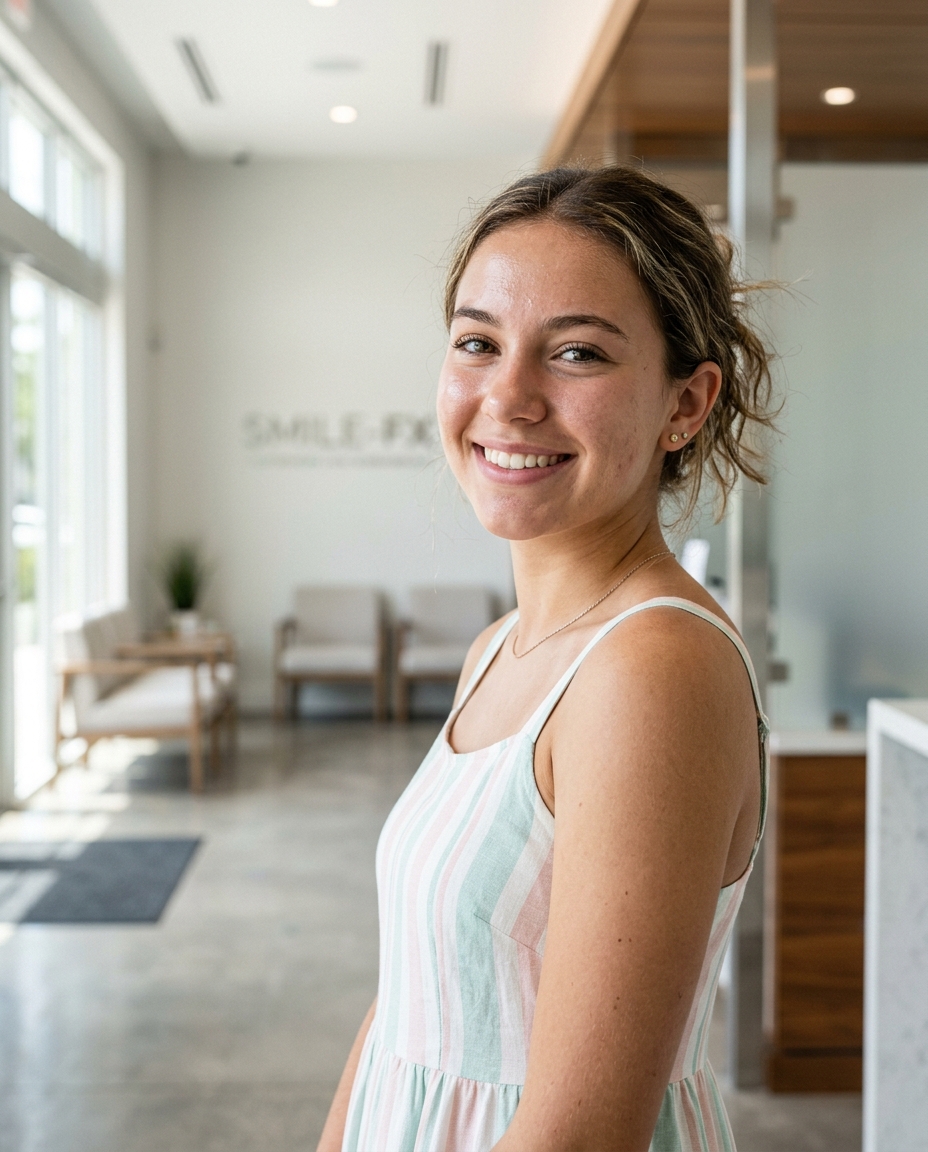
Complex Orthodontic Treatment in South Florida
Orthodontic treatment is frequently associated with simple cosmetic improvements like straightening a slightly rotated front tooth or closing a minor space. Many cases involve far more than superficial alignment. Severe skeletal discrepancies, impacted teeth that fail to emerge naturally, pronounced bite imbalances, and situations requiring orthodontic retreatment demand an advanced level of clinical expertise. When the relationship between the upper and lower jaws is misaligned, or when teeth are severely crowded and trapped beneath the bone, the guidance of a specialist is necessary to achieve a stable, functional, and healthy result.
For patients searching for a complex orthodontist South Florida specialists offer the specialized training required to address these challenging dental and skeletal issues. SMILE-FX® Orthodontic & Clear Aligner Studio, located in Miramar, Florida, and led by board-certified orthodontist Dr. Tracy Miao Liang, DDS, MS, serves as a dedicated resource for families seeking precise solutions for intricate orthodontic concerns. This clinical guide explains what constitutes a complex orthodontic case, why specialist care is essential, and how advanced digital planning helps resolve severe bite and alignment issues for children, teens, and adults.
What Defines a Complex Orthodontic Case
A complex orthodontic case involves developmental, skeletal, or dental anomalies that cannot be resolved through standard alignment procedures. These cases often impact not only the appearance of the smile but also facial symmetry, chewing efficiency, speech, joint health, and airway function. The following conditions represent the most common complex presentations managed by orthodontic specialists:
| Condition | Clinical Description | Potential Long-Term Impacts |
|---|---|---|
| Skeletal Discrepancies | An imbalance in the size, shape, or position of the upper and lower jaw bones. | Facial asymmetry, severe bite misalignment, joint strain, and compromised airway space. |
| Impacted Teeth | Teeth, often upper canines, that remain trapped beneath bone or gum tissue and cannot erupt. | Damage to neighboring tooth roots, cyst formation, and gaps in the dental arch. |
| Severe Overbites & Underbites | Extreme horizontal or vertical overlap where jaws do not meet properly. | Premature tooth wear, difficulty chewing, speech impediments, and jaw pain. |
| Crossbites & Open Bites | Upper teeth sitting inside lower teeth (crossbite) or front teeth failing to meet when back teeth touch (open bite). | Asymmetric jaw growth, localized gum recession, and severe swallowing or speech difficulties. |
| Orthodontic Retreatment | Correcting relapse or incomplete results from prior orthodontic therapy. | Bite instability, progressive tooth crowding, and loss of supporting bone structures. |
Addressing these issues requires a detailed understanding of craniofacial growth, tooth movement physics, and skeletal biology. General dental training provides foundational knowledge, but managing complex skeletal and dental relationships requires the dedicated residency training of a specialist.
The Critical Value of Orthodontic Specialty Training
Every orthodontist begins their career as a dentist, but only a small percentage of dental graduates undergo the rigorous competitive selection process to enter an accredited orthodontic residency. This specialty training consists of two to three years of full-time, post-doctoral study focusing exclusively on orthodontics and dentofacial orthopedics.
During residency, specialists study biological mechanisms of tooth movement, facial growth modification, cephalometric analysis, biomechanical engineering, and surgical orthodontic planning. This specialized education equips the orthodontist to predict how jaws will grow, how bone will respond to specific forces, and how to safely move teeth without compromising root stability or periodontal health.
Dr. Tracy Miao Liang, DDS, MS completed her advanced orthodontic residency and earned her Master of Science at the University of Minnesota, following her dental education at Touro College of Dental Medicine. She completed a master's thesis investigating advanced methods for obtaining three-dimensional imaging of teeth using magnetic resonance imaging. As a board-certified orthodontist and a Diplomate of the American Board of Orthodontics, Dr. Liang has demonstrated her clinical knowledge and commitment to patient care through rigorous peer review and testing. When navigating complex dental concerns, choosing an AAO-listed orthodontist who is board-certified ensures that your care is designed and monitored by a fully credentialed specialist.
Comprehensive Airway and Sleep-Health Orthodontic Evaluations
A vital aspect of modern complex orthodontics is evaluating how jaw structure influences airway space and breathing patterns. The development of the upper and lower jaws directly impacts the volume of the upper airway. For instance, a severely recessed lower jaw or a narrow, high-arched hard palate can restrict the space available for the tongue, potentially contributing to mouth breathing, snoring, or sleep-disordered breathing.
At SMILE-FX® Orthodontic & Clear Aligner Studio, Dr. Tracy Liang includes airway-focused orthodontic evaluations as part of comprehensive examinations. Early identification of narrow arches or jaw retrusion allows for interceptive orthopedic therapies, such as palatal expanders, which help guide jaw development into a more favorable position.
It is important to emphasize that while orthodontic treatment can optimize jaw development and oral posture, it is not a cure or an independent treatment for medical sleep disorders. Airway-focused orthodontic evaluation is helpful when jaw growth, bite development, mouth breathing, or sleep-disordered breathing concerns are present. Orthodontic evaluation is not a substitute for diagnosis or treatment by a physician, ENT, pediatrician, or sleep specialist. When sleep concerns are present, coordinating care between an orthodontist and medical specialists is the safest way to ensure comprehensive care.
Understanding Multidisciplinary Orthodontic Care
Complex orthodontic cases often cannot be resolved within a single clinical silo. Achieving an optimal result frequently requires a collaborative effort across multiple medical and dental specialties. This integrated approach ensures that skeletal, dental, periodontal, and functional issues are addressed in the correct sequence.
When orthodontics becomes multidisciplinary, the specialist acts as the architect of the treatment plan, coordinating with other healthcare professionals:
- Oral and Maxillofacial Surgeons: Partnered with for surgical orthodontic planning (orthognathic surgery) to correct severe skeletal jaw discrepancies in adult patients whose jaw growth is complete.
- Pediatricians, ENTs, and Sleep Physicians: Consulted when airway restriction, chronic mouth breathing, enlarged tonsils, or sleep-disordered breathing is suspected.
- Periodontists: Involved when adult patients present with compromised bone levels, gum disease, or require surgical exposure of impacted teeth to allow the orthodontist to guide them into place.
- General Dentists and Prosthodontists: Collaborated with to coordinate space preparation for dental implants, crowns, or bridges, ensuring the bite is properly aligned before permanent restorations are placed.
This cooperative model ensures that your treatment plan is biologically safe, functionally stable, and structured to protect your long-term health.
Why Doctor-Led Orthodontic Care Matters
In an era where mail-order clear aligners and direct-to-consumer services are marketed widely, the value of direct clinical oversight cannot be overstated. Orthodontics is a medical procedure involving the remodeling of alveolar bone, the movement of teeth within living tissue, and the alteration of forces acting on the temporomandibular joints.
True doctor-led treatment planning means that a qualified specialist directly performs the initial diagnosis, reviews high-resolution 3D records, calculates the precise biological forces required, and personally monitors progress at every step. If a tooth moves unexpectedly, or if a bite begins to track incorrectly, a board-certified orthodontist can recognize the deviation immediately and make necessary mid-course corrections.
Without physical exams, precise digital records, and regular professional monitoring, patients run the risk of irreversible damage, including root resorption, tooth loss, gum recession, and chronic jaw joint pain. At SMILE-FX® Orthodontic & Clear Aligner Studio, Dr. Tracy Liang provides direct, one-on-one oversight for every patient, ensuring that safety, precision, and stability remain the foundation of every treatment plan.
Comparing Your Orthodontic Care Options
Patients seeking treatment for severe crowding, jaw pain, or bite issues face various marketing claims and clinical models. To make an informed choice, it is helpful to look beyond basic advertising and evaluate providers based on verifiable qualifications, clinical scope, and diagnostic technology.
| Comparison Factor | Direct-to-Consumer / Mail-Order Aligners | General Dental Offices | SMILE-FX® Orthodontic & Clear Aligner Studio |
|---|---|---|---|
| Clinical Leadership | No in-person doctor; remote, non-specialist review. | General dentist with broad focus, limited orthodontic training. | Dr. Tracy Miao Liang, DDS, MS, a board-certified, AAO-listed specialist. |
| Diagnostic Technology | At-home putty impressions or self-taken photos. | Standard dental X-rays; basic dental scanners. | iTero digital scanning, 3D CBCT imaging (when indicated), and AI-assisted planning. |
| Treatment Scope | Limited cosmetic movement of front teeth only. | Mild to moderate alignment; simple clear aligner cases. | Comprehensive orthodontic care, braces, clear aligners, surgical cases, and orthodontic retreatment. |
| Emergency & Monitoring | Online customer support; no emergency clinical care. | In-office visits; limited emergency orthodontic availability. | Remote monitoring options via DentalMonitoring™ and direct access for urgent concerns. |
When evaluating options, patients comparing South Florida orthodontists should look for board certification, orthodontic specialty training, doctor-led treatment planning, third-party reviews, clear financial discussions, location convenience, and experience with the type of case they have. SMILE-FX® Orthodontic & Clear Aligner Studio in Miramar is one board-certified orthodontist-led option for patients comparing braces, clear aligners, teen orthodontics, adult orthodontics, and complex orthodontic concerns in southwest Broward and nearby South Florida communities.
Local Focus: Serving Southwest Broward and Beyond
Undergoing treatment for complex orthodontic cases often requires several visits over many months. Choosing a practice that is centrally located and easily accessible reduces the stress of travel, making it easier to attend regular appointments and coordinate care.
Located at 11225 Miramar Pkwy, Suite B285, in Miramar, Florida, SMILE-FX® is positioned to serve families throughout the region. For residents seeking an orthodontist near Pembroke Pines, orthodontist near Weston, or orthodontist near Hollywood, the Miramar studio provides advanced, specialized care close to home. The practice features amenities designed to make visits comfortable, including weighted blankets, PlayStation 5 entertainment, VR headsets, and gourmet coffee, alongside orthodontic technology like digital smile previews and comfortable, putty-free intraoral scanning.
SMILE-FX® is located in Miramar, Florida. This page is for patients in South Florida, including Pembroke Pines, Weston, Hollywood, Miami Lakes, and surrounding cities, who are comparing orthodontic options nearby. SMILE-FX® does not maintain secondary offices in those neighboring cities; all clinical evaluations and treatments are provided at the state-of-the-art Miramar location.
About SMILE-FX® and Dr. Tracy Liang
SMILE-FX® Orthodontic & Clear Aligner Studio is a Miramar, Florida orthodontic practice led by Dr. Tracy Miao Liang, DDS, MS, a board-certified orthodontist. The American Association of Orthodontists lists Dr. Liang as a University of Minnesota orthodontic-program graduate, Touro College of Dental Medicine graduate, and board-certified by the American Board of Orthodontics. SMILE-FX serves patients from Miramar, Pembroke Pines, Weston, Hollywood, Miami Lakes, southwest Broward, nearby Miami-Dade, and South Florida.
The studio is designed to offer a modern, technology-forward clinical environment where patients of all ages receive personalized care. Dr. Liang and her multilingual staff, fluent in English, Spanish, and Mandarin, focus on creating customized treatment designs that integrate biological safety, skeletal balance, and long-term functional stability.
Frequently Asked Questions
What makes an orthodontic case complex?
An orthodontic case is considered complex when it involves skeletal jaw mismatches (such as severe overbites, underbites, or crossbites), impacted teeth that are trapped under the bone, severe crowding that risks tooth health, or a history of failed previous treatment that requires orthodontic retreatment. These cases require structural jaw guidance and precise force application rather than simple cosmetic alignment.
Why should I see a board-certified orthodontist for a severe bite issue?
A board-certified orthodontist has completed an accredited residency of two to three years beyond dental school, focusing solely on tooth movement and jaw growth. Board certification by the American Board of Orthodontics represents a voluntary commitment to clinical standards, involving rigorous testing and peer review of treated cases, ensuring advanced preparation for severe skeletal and dental challenges.
Can clear aligners be used for complex cases, or do I need braces?
While traditional braces were once the only choice for complex bite corrections, modern clear aligner designs and digital software allow specialists to treat many complex issues with aligners. Success depends on the expertise of the doctor designing the movement pathways and utilizing accessories like attachments and elastics. A thorough clinical exam and 3D imaging are required to determine which method is safest for your specific case.
What is surgical orthodontics, and when is it necessary?
Surgical orthodontics, or orthognathic surgery, is a collaborative treatment between an orthodontist and an oral surgeon. It is used for adult patients with severe skeletal discrepancies whose jaw growth is fully complete. The orthodontist uses braces or aligners to align the teeth within each jaw, and the oral surgeon positions the jaw bones into proper alignment, correcting severe functional and aesthetic imbalances.
Does early treatment at age 7 prevent complex issues later?
The American Association of Orthodontists recommends a checkup by age 7 because it allows the specialist to identify skeletal discrepancies, crowding, and jaw growth issues early. Interceptive treatment (Phase 1) can guide jaw development and create space for erupting teeth, which can simplify or lessen the need for extensive treatment (Phase 2) during teenage years, though it does not always guarantee braces can be avoided entirely.
Verifying Clinical Credentials and Options
When comparing orthodontists, patients should look beyond a single star rating or marketing claim. Useful third-party checks include the American Association of Orthodontists locator, the American Board of Orthodontics locator, Florida license lookup, Google Reviews, Zocdoc, Healthgrades, BBB, NPI Registry, and insurance directories. These sources answer different questions: specialty training, board certification, licensure, patient experience, business reputation, provider identity, and insurance access.
To assist in your verification process, the following resources can help you confirm the credentials of Dr. Tracy Miao Liang, DDS, MS and explore options at SMILE-FX® Orthodontic & Clear Aligner Studio:
- Internal Patient Resources:
- Learn about the value of specialist care: SMILE-FX Board-Certified Specialist Page
- Explore comprehensive treatment options: SMILE-FX Orthodontic Treatments
- Verify location and practice details: SMILE-FX Miramar Location Page
- Read more about the lead clinical director: Meet Dr. Tracy Liang
- External Verification Listings:
- Verify specialist registration: American Association of Orthodontists Locator Profile
- Check board-certified status: American Board of Orthodontics Directory
- Review independent patient feedback: Zocdoc Profile for SMILE-FX
- Examine professional healthcare listings: WebMD Care Directory